

The journey of chocolate begins in the ancient civilizations of Mesoamerica, where the cacao tree, Theobroma cacao, was revered not just as a food source but as a sacred plant. The Olmecs, one of the earliest known cultures in the region, are believed to have been the first to cultivate cacao around 1500 BCE. They prepared a bitter drink made from ground cacao beans, often flavored with spices and consumed during rituals and ceremonies.
This early form of chocolate was far removed from the sweet confections we enjoy today; it was a frothy, bitter beverage that held significant cultural importance. As time progressed, the Mayans and Aztecs further developed the use of cacao. The Mayans referred to chocolate as “xocolātl,” which translates to “bitter water.” They consumed it during religious ceremonies and believed it had divine properties.
The Aztecs, on the other hand, valued cacao beans so highly that they were used as currency. The famous Aztec emperor Montezuma reportedly drank vast quantities of chocolate daily, believing it to be an aphrodisiac and a source of strength. When Spanish explorers arrived in the Americas in the 16th century, they brought cacao back to Europe, where it underwent significant transformation.
Sweeteners like sugar and spices were added, leading to the creation of the first sweetened chocolate drinks that quickly gained popularity among European aristocracy. By the 19th century, technological advancements such as the invention of the steam engine and the cocoa press revolutionized chocolate production. This allowed for mass production and made chocolate more accessible to the general public.
In 1847, Joseph Fry created the first solid chocolate bar by mixing cocoa powder with sugar and cocoa butter. This innovation paved the way for modern chocolate confections. The subsequent introduction of milk chocolate by Daniel Peter and Henri Nestlé in 1875 further expanded chocolate’s appeal, leading to its status as a beloved treat worldwide.
Today, chocolate is not only a culinary delight but also a multi-billion dollar industry that continues to evolve.
Key Takeaways
- Chocolate has a rich history dating back to ancient times, with its consumption and production evolving over the centuries.
- While some health benefits of chocolate have been proven, such as its antioxidant properties, moderation is key to reaping these benefits.
- Dark, milk, and white chocolate are just the beginning – there are many other types and flavors to explore in the world of chocolate.
- The process of making chocolate from cacao beans to the final bar is a complex and intricate art that requires skill and precision.
- Indulge in decadent chocolate desserts with recipes that will satisfy any sweet tooth, from classic favorites to innovative creations.
The Health Benefits of Chocolate: Myth or Reality?
The health benefits of chocolate have been a topic of much debate and research over the years. Dark chocolate, in particular, has garnered attention for its potential health-promoting properties. Rich in flavonoids—antioxidants found in plants—dark chocolate has been linked to various health benefits.
Studies suggest that these flavonoids can improve heart health by enhancing blood flow, lowering blood pressure, and reducing inflammation. For instance, a study published in the Journal of the American College of Cardiology found that individuals who consumed dark chocolate regularly had a lower risk of cardiovascular disease compared to those who did not. Moreover, dark chocolate has been shown to improve cognitive function.
Research indicates that the flavonoids in dark chocolate may enhance brain function by increasing blood flow to the brain. A study conducted by researchers at the University of L’Aquila in Italy found that participants who consumed dark chocolate performed better on cognitive tests than those who consumed white chocolate or no chocolate at all. Additionally, dark chocolate may have mood-enhancing properties due to its ability to stimulate the production of endorphins and serotonin, neurotransmitters associated with feelings of happiness and well-being.
However, it is essential to approach these health claims with caution. While moderate consumption of dark chocolate can be beneficial, excessive intake can lead to weight gain and other health issues due to its high calorie and sugar content. Furthermore, not all chocolate is created equal; many commercially available products contain added sugars and unhealthy fats that can negate any potential health benefits.
Therefore, it is crucial for consumers to choose high-quality dark chocolate with a cocoa content of at least 70% to maximize its health benefits while enjoying it as part of a balanced diet.
Exploring the Different Types of Chocolate: Dark, Milk, White, and Beyond
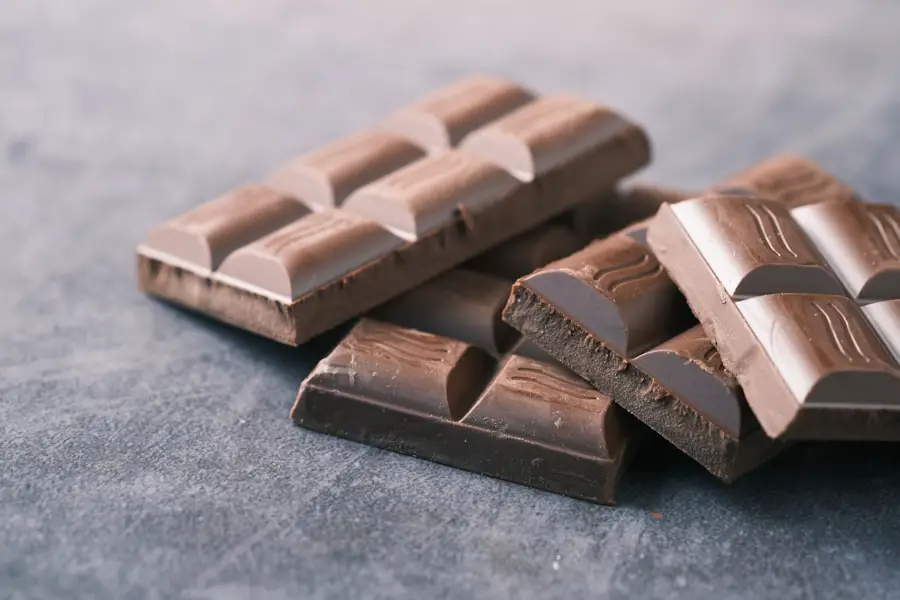
Chocolate comes in various forms, each with its unique flavor profile and characteristics. Dark chocolate is often celebrated for its rich taste and health benefits. It contains a higher percentage of cocoa solids—typically ranging from 50% to 90%—and minimal sugar compared to other types.
The absence of milk solids allows the natural flavors of cocoa to shine through, resulting in a complex taste that can range from bitter to sweet depending on the cocoa content. Dark chocolate is often used in baking and cooking due to its intense flavor and ability to pair well with various ingredients. Milk chocolate, on the other hand, is sweeter and creamier due to the addition of milk solids and higher sugar content.
It typically contains around 10% to 50% cocoa solids, making it less intense than dark chocolate. Milk chocolate is often favored for its smooth texture and sweet flavor, making it a popular choice for confections and candy bars. Brands like Cadbury and Hershey have made milk chocolate synonymous with childhood treats and nostalgic memories. White chocolate diverges from traditional definitions of chocolate as it contains no cocoa solids; instead, it is made from cocoa butter, sugar, and milk solids. This results in a sweet and creamy product that lacks the characteristic cocoa flavor found in dark and milk chocolates.
While some purists argue that white chocolate should not be classified as chocolate at all, it has carved out its niche in desserts and confections. Beyond these three main types, there are also specialty chocolates infused with flavors such as sea salt, chili pepper, or even exotic spices like cardamom. Artisan chocolatiers experiment with unique combinations that elevate traditional chocolate into gourmet experiences.
The Art of Chocolate Making: From Bean to Bar
| Stage | Process | Duration |
|---|---|---|
| Fermentation | Beans are fermented to develop flavor | 5-7 days |
| Drying | Beans are dried to reduce moisture content | 1-2 weeks |
| Roasting | Beans are roasted to bring out flavors | 20-30 minutes |
| Cracking & Winnowing | Beans are cracked and shell is removed | 1-2 hours |
| Grinding | Liquor is ground to create chocolate paste | 12-24 hours |
| Conching | Chocolate is refined and aerated | 6-72 hours |
| Tempering | Chocolate is tempered for smooth texture | 30-45 minutes |
| Molding | Chocolate is molded into bars or shapes | Varies |
The process of making chocolate is an intricate art that begins with the harvesting of cacao pods from cacao trees. Once harvested, the pods are opened to extract the cacao beans, which are then fermented for several days—a crucial step that develops their flavor profile. After fermentation, the beans are dried under the sun before being roasted at controlled temperatures.
Roasting enhances the beans’ flavor while also making it easier to remove their outer shells. Once roasted, the beans are cracked open to reveal nibs—the edible part of the cacao bean. These nibs are ground into a paste known as chocolate liquor (despite containing no alcohol).
This paste can be further processed into cocoa solids and cocoa butter through hydraulic pressing. The ratio of these two components determines whether the final product will be dark or milk chocolate. For dark chocolate, cocoa solids are combined with sugar and sometimes additional cocoa butter; for milk chocolate, milk powder is added along with sugar.
The final stages involve tempering—a process that involves carefully heating and cooling the chocolate to stabilize its structure for a glossy finish and smooth texture. Once tempered, the chocolate can be molded into bars or shaped into various confections. This meticulous process requires skill and precision; even slight variations in temperature or timing can significantly affect the final product’s quality.
Artisan chocolatiers often take pride in their craftsmanship, experimenting with different techniques and ingredients to create unique flavors and textures that reflect their personal style.
Decadent Chocolate Desserts: Recipes to Satisfy Your Sweet Tooth
Chocolate desserts have an undeniable allure that captivates dessert lovers around the globe. One classic recipe that showcases the richness of chocolate is the molten lava cake—a decadent treat featuring a gooey center that flows out when cut into. To make this indulgent dessert, one typically combines high-quality dark chocolate with butter, eggs, sugar, and flour before baking them just long enough for the outer layer to set while keeping the center molten.
Another beloved dessert is the classic chocolate mousse—a light yet rich concoction made from whipped cream folded into melted dark chocolate along with egg whites for aeration.
The airy texture combined with deep chocolate flavor creates an irresistible experience for any chocoholic.
For those looking for something more adventurous, consider trying a flourless chocolate cake—a dense yet fudgy dessert that is naturally gluten-free. Made primarily from dark chocolate, butter, eggs, and sugar, this cake delivers an intense chocolate experience without any flour to dilute its richness. Topped with a dusting of powdered sugar or served alongside a scoop of vanilla ice cream, this dessert is sure to impress at any gathering.
Pairing Chocolate with Wine, Coffee, and Other Indulgences
The art of pairing chocolate with beverages can elevate both experiences significantly when done thoughtfully. When it comes to wine pairings, dark chocolate often complements full-bodied red wines such as Cabernet Sauvignon or Zinfandel due to their robust flavors and tannins that balance out the sweetness of the chocolate. A rich port wine can also enhance dark chocolate’s complexity while adding layers of fruitiness.
Milk chocolate pairs beautifully with lighter wines like Riesling or Moscato; their sweetness harmonizes well with milk chocolate’s creamy texture without overpowering it. For those who prefer white wine, a sparkling wine like Prosecco can provide a refreshing contrast against milk chocolates’ sweetness. Coffee lovers will find that certain types of coffee can enhance their enjoyment of chocolate as well.
A rich espresso or dark roast coffee can complement dark chocolates’ bitterness while bringing out its nuanced flavors. Conversely, lighter roasts may pair better with milk chocolates due to their milder profiles. Beyond wine and coffee pairings lies an entire world of indulgences that can enhance your experience with chocolate—think artisanal cheeses or even charcuterie boards featuring cured meats alongside various types of chocolates for an unexpected twist on traditional pairings.
Chocolate Around the World: How Different Cultures Enjoy This Decadent Treat
Chocolate’s global journey has led to diverse interpretations across cultures that celebrate this beloved ingredient in unique ways. In Mexico, traditional hot chocolate is often prepared using water instead of milk and flavored with spices such as cinnamon or vanilla—creating a rich beverage enjoyed during breakfast or special occasions. In Switzerland—renowned for its high-quality chocolates—confectioners have perfected techniques for creating smooth pralines filled with ganache or fruit-infused creams that showcase their craftsmanship through intricate designs.
Meanwhile, in Belgium—another country famous for its chocolates—artisans create exquisite truffles filled with everything from classic ganache to innovative flavors like lavender or chili pepper; these treats are often presented in beautifully designed boxes that reflect their artistic nature. In Japan, matcha-infused chocolates have gained popularity as part of a broader trend toward incorporating traditional ingredients into modern confections; this fusion highlights how cultures adapt classic flavors while embracing new culinary trends.
The Future of Chocolate: Trends and Innovations in the Industry
As consumer preferences evolve toward healthier options and sustainability becomes increasingly important in food production practices—chocolate manufacturers are adapting accordingly by exploring innovative approaches within their industry. One notable trend is the rise of bean-to-bar chocolatiers who prioritize transparency throughout their supply chains—from sourcing ethically grown cacao beans directly from farmers to crafting small-batch chocolates that emphasize quality over quantity. Additionally, there has been growing interest in plant-based alternatives such as vegan chocolates made without dairy products; these options cater not only to those following specific dietary restrictions but also appeal broadly due to their perceived health benefits.
Sustainability initiatives are also gaining traction within major brands seeking certification programs like Fair Trade or Rainforest Alliance; these certifications ensure ethical practices throughout production processes while promoting environmental conservation efforts.
As we look ahead into this dynamic landscape—it’s clear that while our love affair with chocolate remains timeless—the ways we enjoy it will continue evolving alongside societal shifts toward sustainability and innovation within culinary arts.
If you’re a fan of chocolate, you may also enjoy learning about a delicious Raspberry Jam Crumb Cake recipe. This sweet treat combines the tartness of raspberries with the rich sweetness of chocolate in a delightful dessert. Check out the recipe here for a new twist on your favorite chocolate flavors.
FAQs
What is chocolate?
Chocolate is a food product made from the seeds of the cacao tree. These seeds are fermented, roasted, and ground to produce cocoa mass, which is then used to make chocolate.
What are the different types of chocolate?
There are several types of chocolate, including dark chocolate, milk chocolate, and white chocolate. Dark chocolate contains a higher percentage of cocoa solids, while milk chocolate contains milk powder or condensed milk. White chocolate contains cocoa butter, sugar, and milk, but no cocoa solids.
Where is chocolate produced?
Cacao trees are primarily grown in tropical regions near the equator, such as West Africa, South America, and Southeast Asia. The largest producers of cacao beans are Ivory Coast, Ghana, and Indonesia.
What are the health benefits of chocolate?
Dark chocolate, in particular, is known to have health benefits when consumed in moderation. It contains antioxidants, which can help protect the body from damage caused by free radicals. It may also have a positive effect on heart health and brain function.
What are the different ways to consume chocolate?
Chocolate can be consumed in various forms, including as a solid bar, in hot or cold beverages, as a coating for confectionery items, and as an ingredient in baked goods and desserts.
Is chocolate addictive?
Chocolate contains substances such as caffeine and theobromine, which can have stimulating effects on the body. Some people may experience cravings for chocolate, but it is not considered to be physically addictive in the same way as drugs or alcohol.