

The origins of gelato can be traced back to ancient civilizations, where the concept of frozen desserts began to take shape. In ancient Rome, wealthy citizens would enjoy a delicacy made from snow and ice, often flavored with honey, fruits, and spices. This early form of frozen treat was a luxury reserved for the elite, as the process of obtaining and preserving ice was labor-intensive and costly.
The Romans would send slaves to the mountains to collect snow, which was then stored in insulated pits to keep it from melting. This practice laid the groundwork for what would eventually evolve into gelato. As time progressed, the art of creating frozen desserts continued to develop.
During the Renaissance in Italy, the introduction of sugar and new flavoring techniques transformed these icy treats into something more refined. The Medici family, known for their patronage of the arts and sciences, played a significant role in popularizing these frozen delights. It was in this era that the first gelato recipes began to emerge, with chefs experimenting with various ingredients and methods.
By the 16th century, gelato had become a staple in Italian culture, enjoyed by both nobility and commoners alike.
Key Takeaways
- Gelato has a rich history dating back to ancient Rome and has evolved into the modern Italian treat we know today.
- The main differences between gelato and ice cream lie in their ingredients, texture, and serving temperature.
- Traditional Italian gelato flavors vary by region and offer a diverse culinary experience.
- The art of making gelato involves specific techniques and high-quality ingredients to achieve its signature creamy texture and intense flavors.
- Gelato has become a global sensation, with variations and adaptations found in countries around the world.
The Difference Between Gelato and Ice Cream: What Sets Gelato Apart
While gelato and ice cream may appear similar at first glance, several key differences set them apart. One of the most significant distinctions lies in their ingredients and proportions. Gelato typically contains less cream than ice cream, which results in a lower fat content.
While traditional ice cream is made with a base of heavy cream, milk, sugar, and egg yolks, gelato relies more heavily on milk and less on cream. This difference in fat content not only affects the texture but also enhances the flavor profile of gelato, allowing for a more intense taste experience. Another crucial factor that differentiates gelato from ice cream is the churning process.
Gelato is churned at a slower speed than ice cream, which incorporates less air into the mixture. This results in a denser and creamier texture that melts more quickly in the mouth. The lower air content also means that gelato has a more concentrated flavor, as there is less dilution from the air bubbles.
Additionally, gelato is typically served at a slightly warmer temperature than ice cream, further enhancing its smoothness and allowing the flavors to shine through.
Traditional Italian Gelato Flavors: A Culinary Journey Through Italy
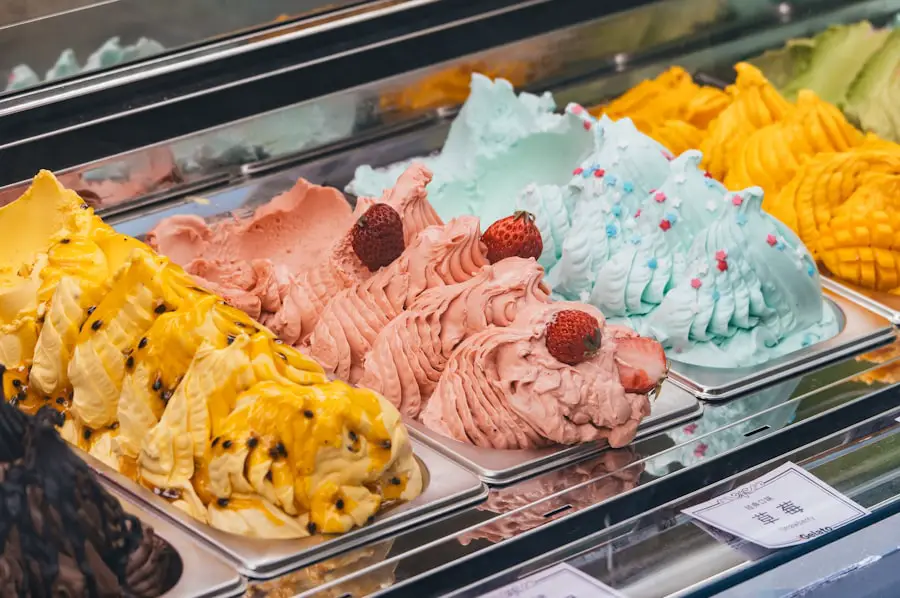
Italy boasts a rich tapestry of traditional gelato flavors that reflect its diverse regional ingredients and culinary heritage. One of the most iconic flavors is “stracciatella,” which originated in Bergamo.
Another beloved flavor is “pistacchio,” particularly popular in Sicily, where the local pistachios are renowned for their rich flavor and vibrant green color. In addition to these classics, regional specialties abound throughout Italy.
For instance, “nocciola,” or hazelnut gelato, is a staple in Piedmont, where the region’s hazelnuts are celebrated for their unique taste. Meanwhile, “limone” captures the essence of the Amalfi Coast with its bright and zesty lemon flavor, often made with locally sourced lemons that are known for their aromatic qualities. Each flavor tells a story of its origin, showcasing the local ingredients and traditions that have been passed down through generations.
The Art of Making Gelato: Techniques and Ingredients
| Technique | Ingredient | Measurement |
|---|---|---|
| Base Gelato | Milk | 500ml |
| Cream | 250ml | |
| Sugar | 150g | |
| Stabilizer | 5g | |
| Flavoring | As needed | |
| Fruit Sorbetto | Fruit Puree | 500g |
| Sugar | 150g | |
| Water | 250ml | |
| Lemon Juice | 30ml |
Creating authentic gelato is an art form that requires precision and an understanding of ingredients. The base of gelato typically consists of milk, sugar, and stabilizers, with some recipes incorporating egg yolks for added richness. The choice of milk is crucial; high-quality whole milk is preferred for its creaminess and ability to create a smooth texture.
Sugar not only sweetens the mixture but also plays a vital role in lowering the freezing point, ensuring that the gelato remains soft and scoopable. The process of making gelato involves several key steps. First, the ingredients are combined and heated to pasteurize the mixture, which eliminates any harmful bacteria while also dissolving the sugar completely.
After cooling, flavorings such as fruit purees or chocolate are added before the mixture is churned in a gelato machine. The slow churning process incorporates minimal air while freezing the mixture, resulting in a dense and creamy final product. Mastering this technique requires practice and an understanding of how different ingredients interact during freezing.
Gelato Around the World: How Italy’s Favorite Treat Became a Global Sensation
Gelato’s journey from Italy to global prominence is a fascinating tale of cultural exchange and culinary innovation. As Italian immigrants spread across the globe in the late 19th and early 20th centuries, they brought their beloved gelato recipes with them. In cities like New York, Buenos Aires, and Sydney, gelaterias began to pop up, introducing local populations to this delightful frozen treat.
Over time, these establishments adapted traditional recipes to suit local tastes while still honoring their Italian roots. In recent years, gelato has gained immense popularity beyond its traditional borders. Artisanal gelaterias have emerged worldwide, often emphasizing high-quality ingredients and innovative flavors that reflect local culinary trends.
For example, in Japan, matcha-flavored gelato has become a favorite among consumers seeking unique taste experiences. Similarly, in Australia, gelaterias have embraced native ingredients like wattleseed and finger lime to create distinctly Australian flavors. This global adaptation showcases how gelato has transcended its origins while still maintaining its core identity as an Italian delicacy.
Health Benefits of Gelato: Surprising Reasons to Indulge in Moderation

Natural Ingredients and Essential Vitamins
Many gelaterias prioritize using fresh, natural ingredients in their recipes. This means that fruit-based gelatos can provide essential vitamins and antioxidants found in whole fruits. For instance, a scoop of strawberry gelato made from real strawberries can offer vitamin C along with other beneficial nutrients.
A Cleaner Alternative to Frozen Desserts
Furthermore, because gelato is often made without artificial flavors or preservatives, it can be a cleaner alternative to other frozen desserts that may contain additives or excessive sugars. This makes it a more guilt-free option for those looking to satisfy their sweet tooth without overindulging.
A Rich Flavor Experience with Fewer Calories
This makes gelato a more guilt-free option for those looking to satisfy their sweet tooth without overindulging. With fewer calories per serving, gelato can be enjoyed as an occasional treat without the guilt associated with traditional ice cream.
Gelato Culture in Italy: The Role of Gelaterias in Italian Society
In Italy, gelaterias are more than just places to buy frozen treats; they are integral to social life and community culture. These establishments serve as gathering spots where friends and families come together to enjoy a scoop or two while engaging in lively conversation. The act of enjoying gelato is often accompanied by leisurely strolls through town squares or along picturesque streets, making it a cherished part of daily life.
Gelaterias also play a significant role in preserving traditional recipes and techniques passed down through generations. Many artisans take pride in crafting their gelato using time-honored methods while also experimenting with new flavors that reflect contemporary tastes. This blend of tradition and innovation keeps the culture surrounding gelato vibrant and dynamic.
Festivals celebrating gelato are held throughout Italy, showcasing regional specialties and fostering a sense of pride among local producers.
DIY Gelato: How to Make Authentic Italian Gelato at Home
For those who wish to bring a taste of Italy into their own kitchens, making authentic gelato at home can be an enjoyable endeavor. The process begins with selecting high-quality ingredients; fresh milk and cream are essential for achieving that creamy texture characteristic of traditional gelato. A basic recipe typically includes whole milk, sugar, and flavorings such as vanilla extract or fruit purees.
To start making gelato at home, combine the milk and sugar in a saucepan over medium heat until the sugar dissolves completely. If using egg yolks for added richness, whisk them separately before tempering them with some warm milk mixture before combining everything back together on low heat until slightly thickened. Once cooled, pour the mixture into an ice cream maker according to the manufacturer’s instructions until it reaches a soft-serve consistency.
For those without an ice cream maker, placing the mixture in a shallow dish and stirring every 30 minutes as it freezes can yield satisfactory results. By following these steps and experimenting with various flavors—be it classic chocolate or adventurous combinations like lavender honey—home cooks can create delicious gelato that rivals what they might find in an Italian gelateria. This hands-on approach not only allows for customization but also fosters an appreciation for the craft behind this beloved dessert.
If you’re looking for a delicious dessert to complement your savory meal, why not try some Gelato? Gelato is a creamy and flavorful Italian ice cream that is sure to satisfy your sweet tooth. For a unique twist, you can pair your Gelato with some Pork Dumplings with Black Vinegar and Ginger. The combination of the rich and creamy Gelato with the savory and tangy flavors of the dumplings is sure to be a hit at your next dinner party. Check out the recipe com/pork-dumplings-with-black-vinegar-and-ginger/’>here!
FAQs
What is gelato?
Gelato is a traditional Italian frozen dessert that is similar to ice cream but has a lower fat content and is churned at a slower speed, resulting in a denser and creamier texture.
What are the main ingredients in gelato?
The main ingredients in gelato are milk, sugar, and flavorings such as fruit, nuts, chocolate, or other ingredients. It typically contains less cream and eggs than traditional ice cream.
How is gelato different from ice cream?
Gelato is different from ice cream in that it has a lower fat content, less air churned into it, and is served at a slightly warmer temperature, giving it a denser and creamier texture.
What are some popular flavors of gelato?
Popular flavors of gelato include chocolate, vanilla, pistachio, hazelnut, fruit flavors such as strawberry and lemon, as well as more unique flavors like tiramisu, stracciatella, and salted caramel.
Is gelato gluten-free?
Gelato can be gluten-free, but it depends on the specific ingredients and flavorings used. It’s important to check the ingredients list or ask the gelato maker to ensure it is gluten-free.
Is gelato suitable for vegetarians?
Gelato can be suitable for vegetarians, as it is typically made with milk, sugar, and flavorings. However, some flavors may contain ingredients such as eggs or gelatin, so it’s important to check the ingredients list.