

A balanced salad is more than just a mix of greens tossed together; it is a carefully curated combination of ingredients that work in harmony to provide a range of nutrients, flavors, and textures. At its core, a balanced salad should include a variety of components: a base, protein, healthy fats, vegetables, fruits, and herbs or spices. Each of these elements plays a crucial role in not only enhancing the taste but also ensuring that the salad is nutritionally complete.
The base of the salad typically consists of leafy greens, which are rich in vitamins, minerals, and fiber. Common choices include romaine lettuce, spinach, kale, and arugula. These greens serve as the foundation upon which other ingredients are layered.
However, the concept of a balanced salad extends beyond just greens; it encompasses the idea of incorporating diverse food groups to create a meal that is satisfying and nourishing. By understanding the components that contribute to a balanced salad, one can craft dishes that are not only visually appealing but also beneficial for overall health.
Key Takeaways
- A balanced salad should include a variety of components such as a base, protein, healthy fats, colorful vegetables and fruits, fresh herbs and spices, and a healthy dressing.
- Choose a base for your salad that is nutrient-dense and provides a good source of fiber, such as leafy greens, quinoa, or brown rice.
- Adding protein to your salad, such as grilled chicken, tofu, or chickpeas, can help provide sustained energy and keep you feeling full.
- Incorporate healthy fats like avocado, nuts, or olive oil into your salad for added flavor and essential nutrients.
- Select a variety of colorful vegetables and fruits to add to your salad, as they provide a range of vitamins, minerals, and antioxidants.
Choosing the Right Base for Your Salad
Selecting the right base for your salad is essential as it sets the tone for the entire dish. Leafy greens are the most common choice, but there are numerous options available that can cater to different tastes and nutritional needs. For instance, romaine lettuce offers a crisp texture and a mild flavor, making it an excellent choice for traditional salads.
Spinach, on the other hand, is packed with iron and vitamins A and C, providing a nutrient-dense option that can be enjoyed raw or cooked. Beyond traditional greens, one can also explore alternatives such as cabbage or mixed baby greens. Cabbage, particularly red cabbage, adds a crunchy texture and vibrant color while being low in calories and high in fiber.
Mixed baby greens often combine several varieties of young leaves, offering a delicate flavor profile that can enhance the overall experience of the salad. Additionally, grains like quinoa or farro can serve as a hearty base, transforming a simple salad into a more filling meal while adding unique flavors and textures.
Adding Protein for Sustained Energy

Incorporating protein into your salad is vital for creating a balanced meal that provides sustained energy throughout the day. Protein not only helps in muscle repair and growth but also plays a significant role in satiety, keeping you feeling full longer. There are numerous sources of protein that can be added to salads, ranging from animal-based options to plant-based alternatives.
For those who consume animal products, grilled chicken breast, shrimp, or hard-boiled eggs are popular choices that add both flavor and nutrition.
For vegetarians or vegans, legumes such as chickpeas or black beans are excellent sources of protein.
Tofu or tempeh can also be marinated and grilled or sautéed to enhance their flavor while providing a substantial protein boost. By thoughtfully selecting protein sources, one can create salads that not only satisfy hunger but also contribute to overall health.
Incorporating Healthy Fats for Flavor and Nutrients
Healthy fats are an essential component of a balanced salad, as they not only enhance flavor but also aid in the absorption of fat-soluble vitamins such as A, D, E, and K. Including sources of healthy fats can elevate the taste profile of your salad while providing essential fatty acids that support heart health and overall well-being. Common sources of healthy fats include avocados, nuts, seeds, and olive oil.
Avocados are particularly popular in salads due to their creamy texture and rich flavor. They are packed with monounsaturated fats that can help lower bad cholesterol levels while providing a satisfying mouthfeel. Nuts and seeds, such as walnuts or pumpkin seeds, add crunch and depth to salads while delivering omega-3 fatty acids and protein.
Drizzling high-quality olive oil over your salad not only enhances flavor but also provides antioxidants that contribute to heart health. By thoughtfully incorporating healthy fats into your salad, you create a dish that is both delicious and nutritionally robust.
Selecting a Variety of Colorful Vegetables and Fruits
The visual appeal of a salad is often enhanced by the inclusion of colorful vegetables and fruits. Not only do these ingredients make the dish more attractive, but they also provide a wide range of vitamins, minerals, and antioxidants that are crucial for maintaining good health. The principle of “eating the rainbow” encourages individuals to select produce in various colors to ensure they receive diverse nutrients.
For instance, red bell peppers are rich in vitamin C and add sweetness and crunch to salads. Carrots provide beta-carotene, which is converted into vitamin A in the body and supports eye health. Dark leafy greens like kale or Swiss chard offer an abundance of vitamins K and C along with calcium.
Fruits such as berries or citrus segments can introduce natural sweetness and acidity to balance flavors within the salad. By incorporating an array of colorful vegetables and fruits, you not only enhance the aesthetic appeal but also maximize the nutritional benefits of your salad.
Enhancing Flavor with Fresh Herbs and Spices
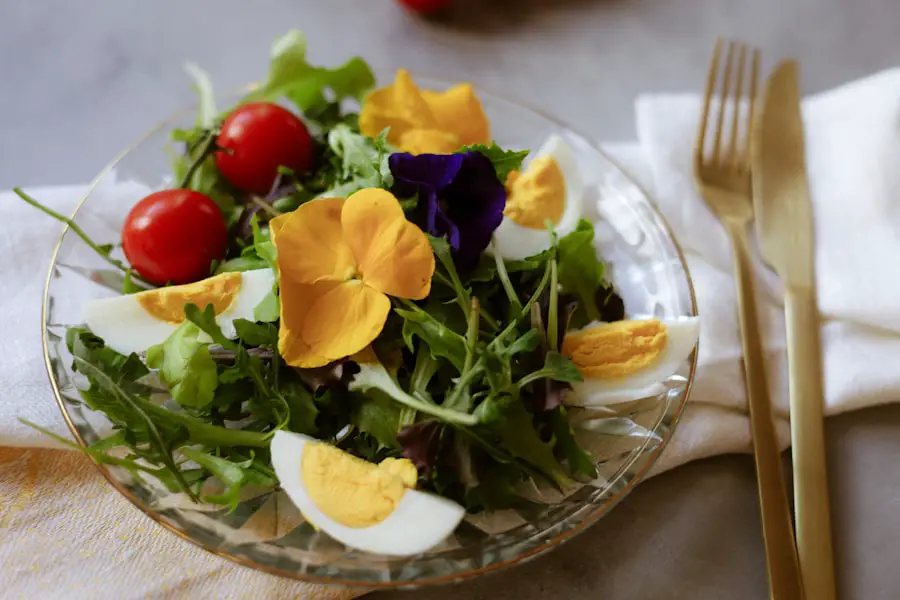
Fresh herbs and spices are often overlooked yet play an integral role in elevating the flavor profile of salads. They can transform a simple dish into something extraordinary by adding depth and complexity without relying on excessive salt or unhealthy dressings. Common herbs such as basil, cilantro, parsley, and dill can impart fresh flavors that complement various ingredients within the salad.
For example, basil pairs beautifully with tomatoes and mozzarella in a Caprese-style salad, while cilantro adds brightness to Mexican-inspired salads featuring black beans and corn. Dill can enhance the flavor of salads containing fish or yogurt-based dressings. Additionally, spices like cumin or paprika can introduce warmth and earthiness to salads with grains or roasted vegetables.
By experimenting with different herbs and spices, one can create unique flavor combinations that make each salad an exciting culinary experience.
Dressing Your Salad with Healthy and Delicious Options
The dressing is often what ties all the components of a salad together; however, many store-bought dressings can be laden with unhealthy fats, sugars, and preservatives. Crafting your own dressing allows for greater control over ingredients while ensuring that it complements the flavors of your salad without overpowering them. A simple vinaigrette made from olive oil, vinegar (such as balsamic or apple cider), mustard, and herbs can provide a tangy yet balanced dressing that enhances rather than masks the natural flavors of the ingredients.
For creamier dressings without the guilt, consider using Greek yogurt as a base combined with herbs and spices for added flavor. Avocado-based dressings offer a rich texture while providing healthy fats. Experimenting with different acids like citrus juices or flavored vinegars can also yield delightful results that keep your salads fresh and exciting.
The key is to strike a balance between flavor and nutrition while ensuring that the dressing enhances rather than detracts from the overall dish.
Tips for Preparing and Storing Your Balanced Salad
Preparation and storage play crucial roles in maintaining the freshness and quality of your balanced salad. When preparing salads ahead of time, it’s essential to consider how different ingredients will hold up over time. For instance, watery vegetables like cucumbers or tomatoes should be added just before serving to prevent sogginess.
Instead, sturdier ingredients like carrots or bell peppers can be mixed in advance without compromising texture. Storing salads properly is equally important to ensure they remain crisp and flavorful. Using airtight containers can help preserve freshness while preventing wilting or spoilage.
If you’ve prepared multiple servings at once, consider layering ingredients strategically: place heavier items at the bottom (like grains or proteins) and lighter items (like greens) on top to minimize bruising. Additionally, keeping dressings separate until serving will help maintain the integrity of your salad components. By following these tips for preparation and storage, you can enjoy delicious balanced salads throughout the week without sacrificing quality or taste.
Whether you’re crafting a quick lunch or an elaborate dinner side dish, understanding how to assemble and store your ingredients will lead to consistently satisfying meals that nourish both body and mind.
If you’re looking to enhance your lunchtime routine with a nutritious and delicious meal, you might find inspiration in the article “How to Create a Balanced Salad for Lunch.” This guide offers tips on combining various ingredients to ensure your salad is both satisfying and healthful. For those interested in complementing their salad with a flavorful appetizer, consider exploring the article on Pot Stickers with Chicken and Chilli Sauce. This dish can add a delightful kick to your meal, making your lunch experience even more enjoyable.
FAQs
What are the key components of a balanced salad for lunch?
A balanced salad for lunch should include a variety of vegetables, a source of protein, healthy fats, and a complex carbohydrate.
What are some examples of vegetables to include in a balanced salad?
Examples of vegetables to include in a balanced salad are leafy greens (such as spinach or kale), bell peppers, cucumbers, tomatoes, carrots, and broccoli.
What are some sources of protein that can be added to a salad?
Sources of protein that can be added to a salad include grilled chicken, tofu, chickpeas, hard-boiled eggs, tuna, or quinoa.
What are some examples of healthy fats to add to a salad?
Examples of healthy fats to add to a salad are avocado, nuts (such as almonds or walnuts), seeds (such as sunflower or pumpkin seeds), and olive oil-based dressings.
What are some examples of complex carbohydrates to include in a salad?
Examples of complex carbohydrates to include in a salad are quinoa, brown rice, sweet potatoes, or whole grain croutons.
How can I add flavor to a balanced salad?
You can add flavor to a balanced salad by using herbs and spices, citrus juice, balsamic vinegar, or a small amount of cheese (such as feta or goat cheese).