

Scones are a delightful baked good that has captured the hearts and palates of people around the world. Originating from the British Isles, these treats are characterized by their crumbly texture and slightly sweet flavor, making them a versatile option for various occasions. Whether enjoyed as a breakfast item, a snack, or a dessert, scones can be adapted to suit a wide range of tastes and preferences.
Their simplicity in preparation belies the depth of flavor and satisfaction they can provide, making them a staple in many households.
They can be made with an array of ingredients, allowing for endless variations that cater to both sweet and savory cravings.
From classic buttermilk scones to more adventurous flavors like cranberry-orange or cheese and chive, the possibilities are virtually limitless. This versatility not only makes scones a favorite among bakers but also ensures that they can be enjoyed by everyone, regardless of dietary preferences or restrictions. As we delve deeper into the world of scones, we will explore their rich history, essential ingredients, and various ways to enjoy them.
Key Takeaways
- Scones are a versatile and delicious treat that can be enjoyed at any time of the day.
- Scones originated in Scotland and have since become popular worldwide.
- The basic ingredients for making perfect scones include flour, butter, sugar, baking powder, and milk.
- Tips and tricks for baking delicious and fluffy scones include using cold ingredients and not overworking the dough.
- Sweet and savory scones offer a variety of flavors to explore and enjoy.
The History of Scones: From Scotland to the World
The origins of scones can be traced back to Scotland in the 1500s, where they were initially made with oats rather than wheat flour. These early scones were often round and flat, cooked on a griddle over an open flame.
Over time, the recipe evolved, incorporating wheat flour and baking powder, which contributed to the lighter texture we associate with modern scones. As the British Empire expanded, so too did the popularity of scones. They became a staple in tea culture, particularly during the Victorian era when afternoon tea gained prominence among the upper classes.
The tradition of serving scones with clotted cream and jam became synonymous with this social ritual, further solidifying their place in British culinary history. Today, scones have transcended their humble beginnings and are enjoyed globally, with each culture adding its unique twist to this beloved treat.
The Basic Ingredients for Making Perfect Scones
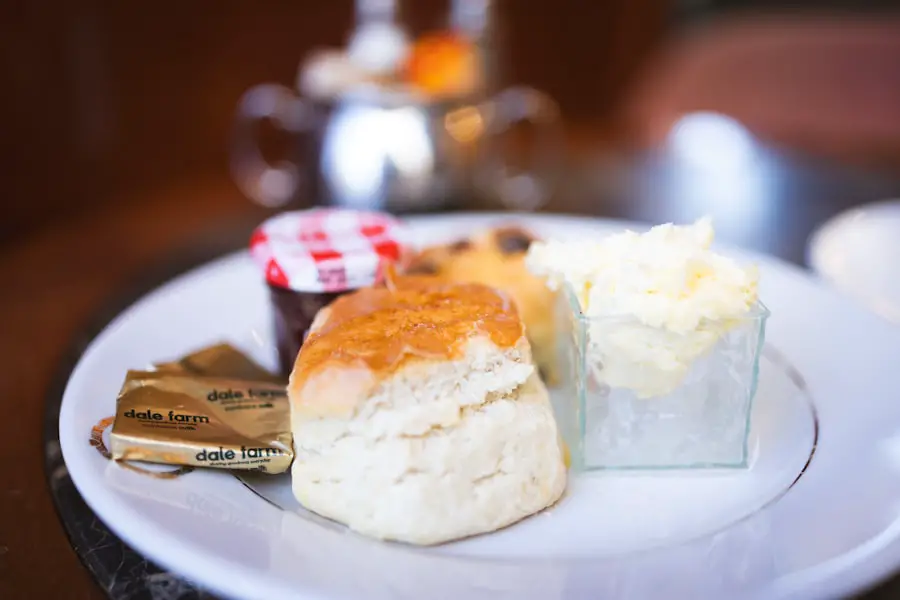
Creating perfect scones requires a few essential ingredients that work together to achieve that signature crumbly texture and rich flavor. The foundation of any scone recipe typically includes all-purpose flour, baking powder, salt, butter, milk or cream, and sugar. Each component plays a crucial role in the final product.
For instance, all-purpose flour provides structure, while baking powder acts as a leavening agent, ensuring that the scones rise beautifully during baking. Butter is another key ingredient that contributes to the scone’s flaky texture. When cold butter is cut into the flour mixture, it creates small pockets of fat that melt during baking, resulting in a tender crumb.
Milk or cream adds moisture and richness to the dough, while sugar enhances sweetness and promotes browning. While these ingredients form the basis of traditional scones, bakers often experiment with additional elements such as fruits, nuts, or spices to create unique flavor profiles that elevate this classic treat.
Tips and Tricks for Baking Delicious and Fluffy Scones
| Ingredients | Measurements |
|---|---|
| Flour | 2 cups |
| Baking powder | 1 tbsp |
| Sugar | 2 tbsp |
| Salt | 1/2 tsp |
| Butter | 1/2 cup, cold and cubed |
| Egg | 1 |
| Heavy cream | 1/2 cup |
| Vanilla extract | 1 tsp |
| Optional add-ins (e.g. chocolate chips, dried fruit, nuts) | As desired |
Baking scones may seem straightforward, but there are several tips and tricks that can help ensure they turn out perfectly every time. One of the most important factors is to keep all ingredients cold, especially the butter. Using cold butter helps maintain its solid state until it melts in the oven, creating those desirable flaky layers.
Additionally, it’s crucial not to overwork the dough; mixing just until combined prevents gluten development, which can lead to tough scones. Another key tip is to use a light hand when shaping the dough. After mixing, gently pat it into a circle on a floured surface rather than rolling it out with a rolling pin.
This method preserves the air pockets created during mixing and contributes to a lighter texture. When cutting the scones into shapes, using a sharp knife or biscuit cutter ensures clean edges that will rise beautifully in the oven. Finally, brushing the tops with an egg wash or milk before baking can enhance browning and give your scones an appealing golden finish.
Scones are not limited to just sweet variations; they can also be transformed into savory delights that are perfect for any occasion. Sweet scones often feature ingredients like dried fruits, chocolate chips, or spices such as cinnamon and nutmeg. Popular sweet variations include blueberry scones drizzled with lemon glaze or cranberry-orange scones that burst with flavor.
These treats are often enjoyed with tea or coffee and can be served at breakfast or as an afternoon snack. On the other hand, savory scones offer a delightful twist on this classic treat. Ingredients such as cheese, herbs, and vegetables can be incorporated into the dough for a more robust flavor profile.
For example, cheddar and chive scones provide a savory option that pairs wonderfully with soups or salads. Alternatively, sun-dried tomato and feta scones bring Mediterranean flair to the table. The versatility of scone recipes allows bakers to experiment with various flavor combinations, ensuring there’s something for everyone’s palate.
Scones for Breakfast: Pairing with Coffee or Tea
Scones make for an excellent breakfast option due to their quick preparation time and satisfying nature. They can be enjoyed on their own or paired with beverages like coffee or tea for a more complete morning experience. A warm blueberry scone alongside a steaming cup of coffee creates a delightful contrast between the rich flavors of the coffee and the sweetness of the scone.
The combination not only satisfies hunger but also provides an energizing start to the day. For those who prefer tea in the morning, classic English breakfast tea pairs beautifully with traditional plain or fruit-filled scones. The robust flavor of black tea complements the buttery richness of the scone while enhancing its sweetness.
Adding a dollop of jam or clotted cream elevates this breakfast experience even further. Whether you opt for sweet or savory varieties, serving scones at breakfast is sure to impress family members or guests alike.
Scones for Afternoon Tea: Serving with Jam and Clotted Cream

Afternoon tea is an elegant tradition that has become synonymous with scone consumption. This ritual typically involves serving freshly baked scones alongside an assortment of teas and accompaniments such as jam and clotted cream. The combination of warm scones slathered with rich clotted cream and fruity jam creates a luxurious treat that is both comforting and indulgent.
When hosting an afternoon tea gathering, presentation is key. Arrange your scones on a tiered stand alongside other treats like finger sandwiches and pastries for an inviting display. Offering a variety of jams—such as strawberry, raspberry, or lemon curd—allows guests to customize their experience according to their preferences.
The act of spreading jam and cream onto warm scones adds an interactive element to the occasion, making it not just about food but also about enjoying time spent together.
Scones for Dessert: Adding a Sweet Twist to a Classic Treat
While traditionally enjoyed at breakfast or during afternoon tea, scones can also be transformed into delightful desserts that satisfy any sweet tooth. By incorporating ingredients like chocolate chips or caramel swirls into the dough, bakers can create decadent variations that are perfect for serving after dinner or at special occasions. For instance, chocolate chip scones drizzled with a rich chocolate glaze offer a delightful twist on the classic recipe.
Another popular dessert variation is the use of seasonal fruits such as peaches or strawberries in sweetened scone recipes. These fruity additions not only enhance flavor but also add visual appeal when served warm with whipped cream or ice cream on top. By reimagining traditional scone recipes as desserts, bakers can showcase their creativity while providing guests with an unexpected yet delicious treat that elevates any meal or gathering.
In conclusion, whether enjoyed as part of breakfast, afternoon tea, or dessert, scones remain a beloved baked good that continues to evolve while retaining their classic charm. Their versatility allows for endless experimentation in flavors and presentations, ensuring they remain relevant in contemporary culinary culture while honoring their rich history.
If you enjoy baking scones, you may also be interested in learning how to make perfectly cooked boneless chicken breast. Check out this recipe for a delicious and easy way to prepare this versatile protein.
FAQs
What are scones?
Scones are a type of baked good that originated in Scotland. They are typically made with flour, sugar, baking powder, butter, milk, and eggs. Scones can be sweet or savory and are often served with jam and clotted cream.
How are scones different from biscuits?
Scones and biscuits are similar in that they are both types of quick breads, but they have some key differences. Scones are typically sweeter and may contain additional ingredients such as dried fruit or nuts. Biscuits are often served as a savory side dish, while scones are more commonly enjoyed as a sweet treat.
What is the best way to eat a scone?
Scones are often enjoyed with a cup of tea or coffee. They are traditionally served with clotted cream and jam, and are best when they are fresh and warm from the oven.
Can scones be made ahead of time?
Yes, scones can be made ahead of time and stored in an airtight container for a day or two. They can also be frozen for longer storage and reheated in the oven when ready to eat.
Are scones healthy?
Scones are a treat and are not typically considered a health food. They are often high in calories, fat, and sugar. However, there are healthier variations that use whole wheat flour, less sugar, and added fruits or nuts for extra nutrients.