

The Bûche de Noël, or Yule log, is a traditional French dessert that has become synonymous with Christmas celebrations in many parts of the world. Its origins can be traced back to ancient pagan traditions, where the burning of a large log during the winter solstice symbolized the return of the sun and the promise of longer days ahead. This practice was deeply rooted in the belief that the log would bring warmth and light to the home during the cold winter months.
As Christianity spread throughout Europe, many of these pagan customs were adapted into Christian traditions, and the Yule log became associated with Christmas festivities. By the 19th century, the Bûche de Noël had evolved from a literal log to a culinary creation. French bakers began crafting this dessert to resemble a log, using sponge cake rolled with rich fillings and adorned with chocolate ganache to mimic the bark of a tree.
The first documented recipes for Bûche de Noël appeared in French cookbooks during this period, showcasing the dessert’s growing popularity. The cake’s design often included decorative elements such as marzipan mushrooms, sugar snowflakes, and edible glitter, transforming it into a centerpiece for holiday gatherings. Today, the Bûche de Noël is not only a delicious treat but also a symbol of warmth, family, and togetherness during the festive season.
Key Takeaways
- The Bûche de Noël, or Yule log, has its origins in ancient Celtic and European winter solstice traditions.
- Traditional ingredients for the Bûche de Noël include sponge cake, chocolate buttercream, and meringue mushrooms, with flavors such as chocolate, coffee, and chestnut.
- Modern variations of the Bûche de Noël include different cake flavors, fillings, and decorations, allowing for creative twists on the classic dessert.
- Making your own Bûche de Noël involves baking a sponge cake, rolling it with filling, and decorating it to resemble a log, complete with bark-like texture and meringue mushrooms.
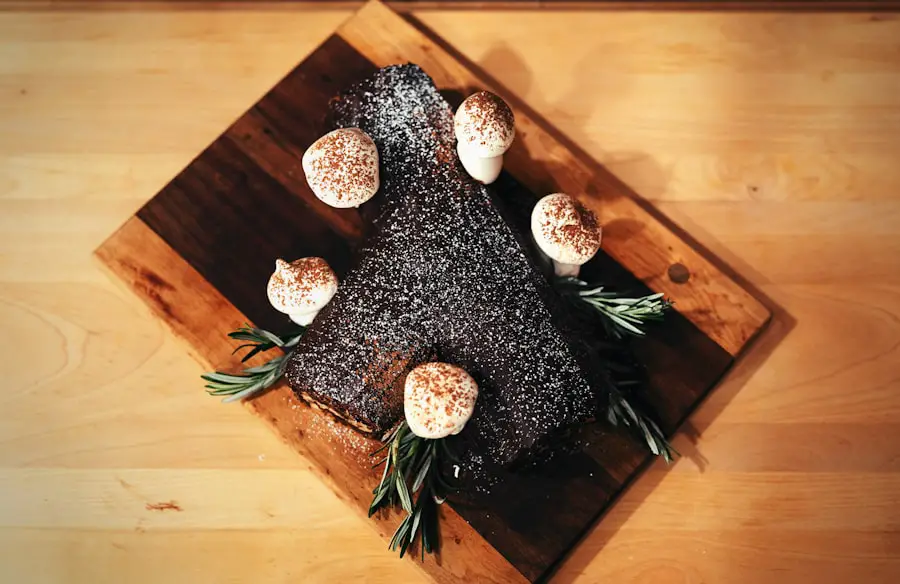
- Tips for decorating and presenting the Bûche de Noël include using a serrated knife to create a bark-like texture, dusting with powdered sugar for a snowy effect, and adding festive decorations like holly leaves and berries.
Traditional Ingredients and Flavors
The traditional Bûche de Noël is characterized by its rich and indulgent flavors, which are achieved through a carefully selected combination of ingredients. The base of the cake is typically made from a light and airy sponge cake known as génoise. This cake is often flavored with vanilla or chocolate, providing a versatile foundation for various fillings.
The sponge is baked in a flat sheet pan and then rolled while still warm, allowing it to take on the shape of a log once filled and frosted. The filling is where creativity can flourish, but classic choices include rich chocolate ganache, coffee-flavored buttercream, or even chestnut cream. Chocolate ganache, made from heavy cream and high-quality chocolate, adds a luxurious texture and flavor that pairs beautifully with the lightness of the sponge.
Chestnut cream, on the other hand, offers a unique taste that evokes memories of winter and holiday gatherings. The exterior of the Bûche de Noël is typically covered in chocolate buttercream or ganache, which is then textured to resemble tree bark. To enhance the visual appeal, bakers often incorporate elements like powdered sugar to mimic snow or candied fruits for a pop of color.
Modern Variations and Creative Twists
In recent years, the Bûche de Noël has undergone a renaissance, with bakers experimenting with flavors and presentations that push the boundaries of this traditional dessert. While chocolate remains a favorite, modern variations have introduced an array of flavors that cater to diverse palates.
These variations not only celebrate traditional flavors but also invite new interpretations that resonate with younger generations. Another exciting trend is the incorporation of international flavors into the Bûche de Noël. For example, matcha green tea has gained popularity in many culinary circles, leading to matcha-flavored sponge cakes filled with white chocolate ganache or yuzu curd.
Additionally, some bakers are experimenting with gluten-free or vegan versions of the Bûche de Noël, ensuring that everyone can partake in this festive delight regardless of dietary restrictions.
How to Make Your Own Bûche de Noël
| Ingredients | Quantity |
|---|---|
| Butter | 1 cup |
| Sugar | 1 cup |
| Eggs | 4 |
| Flour | 1 cup |
| Cocoa powder | 1/4 cup |
| Whipped cream | 2 cups |
| Chocolate shavings | For garnish |
| Vanilla extract | 1 tsp |
Creating your own Bûche de Noël at home can be a rewarding experience that allows you to personalize the flavors and decorations to suit your taste. The process begins with preparing the génoise sponge cake. Start by whisking eggs and sugar together until they reach a pale and fluffy consistency.
Gradually fold in sifted flour and melted butter to maintain the airy texture. Once combined, pour the batter into a lined baking sheet and bake until golden brown. After cooling slightly, carefully roll the sponge in a clean kitchen towel to set its shape.
Once your sponge cake has cooled completely, it’s time to add your filling. Spread an even layer of your chosen filling—be it chocolate ganache or chestnut cream—over the surface of the cake. Roll it up tightly from one end to create a log shape, ensuring that you keep the filling intact.
After rolling, trim the ends for a polished look and place it seam-side down on your serving platter. The final step involves frosting the log with chocolate buttercream or ganache and using a fork or spatula to create texture that resembles tree bark. Decorate with seasonal elements like marzipan mushrooms or edible glitter for an enchanting finish.
Tips for Decorating and Presenting
The presentation of your Bûche de Noël can elevate it from a simple dessert to an eye-catching centerpiece for your holiday table. Start by choosing an appropriate serving platter that complements your cake’s design; rustic wooden boards or elegant porcelain dishes can enhance its visual appeal. When frosting your log, consider using an offset spatula for smooth application and creating texture that mimics bark.
A gentle swirling motion can add depth and dimension to your frosting. To further enhance your decoration, consider incorporating natural elements such as fresh berries, sprigs of rosemary, or edible flowers around the base of the log. These additions not only provide color contrast but also evoke a sense of winter wonderland.
For those looking to add a touch of whimsy, small figurines or decorations representing winter scenes can be placed atop or around the cake. Finally, dusting your Bûche de Noël with powdered sugar just before serving can create a beautiful snow-like effect that captures the essence of holiday cheer.
Pairing Bûche de Noël with Wines and Cocktails
Pairing beverages with your Bûche de Noël can enhance the overall dining experience and complement its rich flavors. When selecting wines, consider options that balance sweetness with acidity. A classic choice is a late-harvest dessert wine such as Sauternes or Tokaji, which offers honeyed notes that harmonize beautifully with chocolate or chestnut flavors.
For those who prefer red wine, a fruity Pinot Noir can provide an elegant contrast without overpowering the dessert. Cocktail enthusiasts may opt for festive concoctions that echo the flavors found in their Bûche de Noël. A rich espresso martini can pair wonderfully with coffee-flavored fillings, while a spiced rum cocktail infused with cinnamon and nutmeg can evoke holiday warmth when served alongside traditional chocolate logs.
Additionally, consider serving a warm mulled wine spiced with cloves and orange zest as an inviting accompaniment that enhances the cozy atmosphere of holiday gatherings.
Bûche de Noël as a Symbol of Holiday Celebrations
The Bûche de Noël transcends mere culinary delight; it embodies the spirit of holiday celebrations across cultures. In France, families gather around this dessert as part of their Christmas Eve dinner known as “Réveillon,” where sharing food becomes an act of love and togetherness. The act of preparing and decorating the Bûche de Noël often involves family members working together in the kitchen, fostering bonds and creating cherished memories that last long after the holiday season has passed.
Moreover, this dessert serves as a reminder of traditions passed down through generations. Many families have their own unique recipes or decorating styles that reflect their heritage and personal stories. As such, each Bûche de Noël carries not only flavors but also narratives that connect individuals to their roots and loved ones.
In this way, it becomes more than just a dessert; it transforms into a symbol of unity and celebration during one of the most cherished times of the year.
Where to Find the Best Bûche de Noël in Your Area
For those who prefer to indulge in professionally crafted Bûche de Noël rather than making one at home, numerous bakeries and patisseries offer exquisite versions during the holiday season. In major cities around the world, renowned pastry chefs showcase their creativity by presenting unique takes on this classic dessert. Local bakeries often feature traditional recipes alongside modern interpretations that reflect regional flavors.
To find the best Bûche de Noël in your area, consider exploring local food blogs or social media platforms where food enthusiasts share their recommendations and experiences. Visiting farmers’ markets or holiday fairs can also lead you to artisanal bakers who specialize in seasonal treats. Additionally, many upscale restaurants offer take-home versions of their signature desserts during the holidays; calling ahead to inquire about availability can ensure you secure a delightful treat for your celebrations.
In conclusion, whether you choose to make your own Bûche de Noël or seek out a local bakery’s creation, this festive dessert remains an enduring symbol of holiday joy and togetherness. Its rich history, diverse flavors, and creative possibilities make it a beloved tradition that continues to evolve while honoring its roots in celebration and family unity.
If you’re looking for a festive dessert to complement your Bûche de Noël, you might want to try making a Duck Breast with Blueberry Port Sauce. This savory dish from Flavorful Sips combines tender duck breast with a rich and tangy blueberry port sauce, creating a perfect balance of flavors. You can find the recipe here.
FAQs
What is a Bûche de Noël?
Bûche de Noël, also known as Yule log, is a traditional French dessert served during the Christmas season. It is made to resemble a yule log and is typically a sponge cake rolled and filled with cream or buttercream.
What are the traditional flavors of Bûche de Noël?
The traditional flavors of Bûche de Noël include chocolate, coffee, and chestnut. The sponge cake is often flavored with cocoa and the filling can be flavored with various ingredients such as chocolate, coffee, or chestnut.
How is Bûche de Noël decorated?
Bûche de Noël is often decorated to resemble a log, with bark-like texture on the outer layer of the cake. It is also commonly decorated with powdered sugar to resemble snow, and often adorned with meringue mushrooms, marzipan holly leaves, or other festive decorations.
What is the history of Bûche de Noël?
The tradition of serving Bûche de Noël dates back to the 19th century in France. The dessert is said to have originated from the ancient Celtic tradition of burning a yule log during the winter solstice, which later became associated with Christmas.
Is Bûche de Noël only served in France?
While Bûche de Noël is a traditional French dessert, it is also enjoyed in other countries around the world, especially in countries with a strong French influence. It has become a popular dessert for Christmas celebrations in many parts of the world.