

Caesar salad is a culinary classic that has transcended its humble origins to become a staple on menus around the world. Its rich history dates back to the 1920s when it was purportedly created by Italian immigrant Caesar Cardini in Tijuana, Mexico. The salad’s unique combination of crisp romaine lettuce, savory dressing, and crunchy croutons has made it a favorite among diners seeking a refreshing yet satisfying dish.
The original recipe, which included ingredients like garlic, olive oil, lemon juice, and Parmesan cheese, has inspired countless variations, but the essence of the Caesar salad remains unchanged: a delightful balance of flavors and textures. The appeal of Caesar salad lies not only in its taste but also in its versatility. It can be served as a starter, a side dish, or even as a main course when topped with grilled chicken or shrimp.
The creamy dressing, often made with anchovies and egg yolks, provides a rich flavor that complements the crispness of the lettuce and the crunch of the croutons. As we delve into the components and preparation of this iconic dish, we will explore how to create an easy Caesar salad that retains the classic elements while allowing for personal touches.
Key Takeaways
- Caesar salad is a classic dish that originated in Tijuana, Mexico, and is known for its creamy dressing and crunchy croutons.
- The key ingredients for an easy Caesar salad include romaine lettuce, Parmesan cheese, croutons, and a homemade dressing made with anchovies, garlic, Dijon mustard, and mayonnaise.
- Making Caesar salad dressing involves blending anchovies, garlic, Dijon mustard, lemon juice, and mayonnaise until smooth, then seasoning with salt and pepper.
- Preparing the salad ingredients involves washing and drying the romaine lettuce, grating the Parmesan cheese, and toasting the croutons until golden and crispy.
- Assembling the Caesar salad involves tossing the romaine lettuce with the dressing, adding the Parmesan cheese and croutons, and serving immediately for best results.
Ingredients for Easy Caesar Salad
To create an easy Caesar salad, one must gather a selection of fresh ingredients that contribute to its signature taste. The primary component is romaine lettuce, known for its sturdy leaves that hold up well against the dressing. A head of romaine typically serves as the base for a standard-sized salad, but feel free to adjust the quantity based on your serving needs.
In addition to the lettuce, high-quality Parmesan cheese is essential; it can be shaved or grated, depending on your preference. The cheese adds a nutty flavor that enhances the overall experience of the salad. The dressing is where the magic happens, and for an easy version, you will need a few key ingredients: mayonnaise, garlic, lemon juice, Worcestershire sauce, Dijon mustard, and black pepper.
While traditional recipes often call for raw egg yolks and anchovies, this simplified approach maintains the creamy texture and tangy flavor without the need for more complex preparation. Croutons are another vital element; they provide a satisfying crunch that contrasts beautifully with the tender lettuce. You can either make your own croutons by toasting bread cubes in olive oil or use store-bought varieties for convenience.
Step-by-Step Instructions for Making Caesar Salad Dressing

Creating the dressing is a crucial step in preparing an easy Caesar salad, and it can be accomplished in just a few minutes. Begin by gathering your ingredients: ½ cup of mayonnaise serves as the base for the dressing, providing creaminess without the need for raw eggs. To this, add two cloves of minced garlic; fresh garlic imparts a robust flavor that is characteristic of Caesar dressing.
Next, squeeze in the juice of one lemon to introduce acidity and brightness to the mixture. Incorporate one teaspoon of Worcestershire sauce for depth and umami flavor; this ingredient is often overlooked but plays a significant role in achieving that signature taste. A teaspoon of Dijon mustard adds a subtle tanginess that complements the other flavors beautifully.
Finally, season with freshly cracked black pepper to taste. Whisk all these ingredients together in a bowl until they are well combined and smooth. If you prefer a thinner consistency, you can add a splash of water or extra lemon juice until you reach your desired texture.
Preparing the Salad Ingredients
Once the dressing is ready, it’s time to prepare the salad ingredients. Start by washing the romaine lettuce thoroughly under cold water to remove any dirt or grit. After rinsing, shake off excess water or use a salad spinner to dry the leaves effectively.
Next, focus on the croutons. If you choose to make your own, preheat your oven to 375°F (190°C).
Cut day-old bread into cubes—about one-inch pieces work well—and toss them in olive oil along with a pinch of salt and any desired seasonings such as garlic powder or Italian herbs. Spread the bread cubes on a baking sheet in a single layer and bake for approximately 10-15 minutes or until they are golden brown and crispy. Keep an eye on them to prevent burning.
If using store-bought croutons, simply measure out an appropriate amount for your salad.
Assembling the Caesar Salad
With all components prepared, it’s time to assemble your Caesar salad. In a large mixing bowl, combine the chopped romaine lettuce with your desired amount of dressing. Start with about half of what you’ve made; you can always add more if needed.
Gently toss the lettuce with the dressing using tongs or your hands until every leaf is coated evenly. This step is crucial because it ensures that each bite is flavorful without being overly drenched in dressing. Once the lettuce is dressed to your liking, it’s time to add the finishing touches: sprinkle in the grated or shaved Parmesan cheese and toss again lightly to distribute it throughout the salad.
Finally, add the croutons on top; this will help maintain their crunchiness as they won’t be tossed with the lettuce. For an extra touch of elegance, consider garnishing with additional Parmesan shavings or even a few whole leaves of romaine for presentation.
Tips for Serving and Storing Caesar Salad
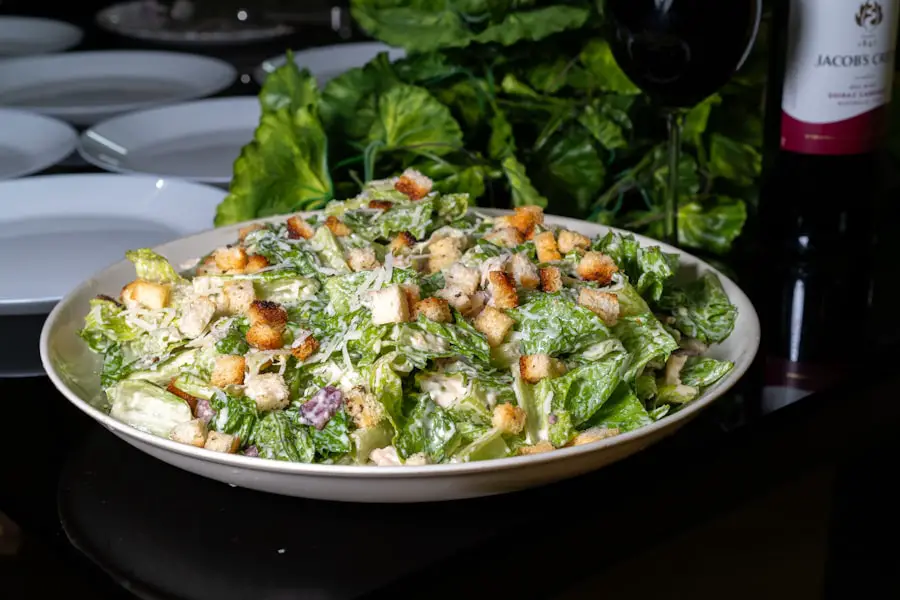
When it comes to serving Caesar salad, presentation can elevate the dining experience significantly. Consider using chilled plates to keep the salad crisp and refreshing. If you’re serving guests, you might want to present individual portions rather than placing a large bowl on the table; this allows for better control over serving sizes and keeps everything looking neat.
A light drizzle of extra dressing over each plate just before serving can also enhance visual appeal. As for storage, Caesar salad is best enjoyed fresh due to its ingredients’ nature. If you have leftovers, store them in an airtight container in the refrigerator but keep in mind that croutons will lose their crunch over time.
To preserve their texture, consider storing them separately and adding them just before serving any leftovers. The dressed salad can typically last for about one day in the fridge; however, if you notice any wilting or off smells from the lettuce or dressing, it’s best to discard it.
Variations and Additions to the Classic Caesar Salad
While traditional Caesar salad is beloved for its simplicity and flavor profile, there are numerous variations that can cater to different tastes and dietary preferences.
Alternatively, shrimp or salmon can be grilled or sautéed and added for a seafood twist that complements the existing flavors beautifully.
For those looking to incorporate more vegetables into their meal, consider adding cherry tomatoes or sliced cucumbers for freshness and color. Roasted vegetables such as bell peppers or asparagus can also provide an interesting contrast in texture and flavor. Additionally, if you want to cater to vegetarian or vegan diets, there are plant-based alternatives available for both Parmesan cheese and mayonnaise that can be used without sacrificing taste.
Conclusion and Final Thoughts
Caesar salad remains an enduring favorite due to its delightful combination of flavors and textures that appeal to many palates. By following simple steps to prepare both the dressing and salad components, anyone can create this classic dish at home with ease. The versatility of Caesar salad allows for endless customization options while still honoring its traditional roots.
Whether enjoyed as a light lunch or as part of a more elaborate dinner spread, this iconic salad continues to be a beloved choice for many diners around the globe.
If you’re looking for another delicious recipe to try, check out this Whole Baked Fish in Sea Salt with Parsley Gremolata article. This dish is a flavorful and impressive option for seafood lovers looking to try something new in the kitchen. The combination of sea salt and parsley gremolata adds a unique twist to this classic dish, making it a must-try for anyone looking to expand their culinary skills.
FAQs
What is a Caesar salad?
A Caesar salad is a popular green salad that typically includes romaine lettuce, croutons, Parmesan cheese, and a dressing made from anchovies, garlic, Dijon mustard, olive oil, and lemon juice.
What are the basic ingredients for a Caesar salad?
The basic ingredients for a Caesar salad include romaine lettuce, croutons, Parmesan cheese, Caesar dressing, and optionally, grilled chicken or shrimp.
What is the traditional dressing for a Caesar salad?
The traditional dressing for a Caesar salad is made from anchovies, garlic, Dijon mustard, olive oil, and lemon juice. It is often referred to as Caesar dressing.
How do you make an easy Caesar salad for beginners?
An easy Caesar salad for beginners can be made by tossing chopped romaine lettuce with Caesar dressing, adding croutons and Parmesan cheese, and optionally topping with grilled chicken or shrimp.
Can I make my own Caesar dressing for the salad?
Yes, you can make your own Caesar dressing by blending together anchovies, garlic, Dijon mustard, olive oil, and lemon juice. There are also many variations of homemade Caesar dressing recipes available online.