

Napoleon Bonaparte, a figure whose name resonates through the annals of history, is often regarded as one of the most influential leaders of the modern era. Born on August 15, 1769, in Corsica, he rose from relatively humble beginnings to become Emperor of the French and a key player in European politics during the early 19th century. His legacy is multifaceted, encompassing military prowess, legal reforms, and cultural influence, which continue to shape contemporary society.
The complexities of his character and actions have led to a legacy that is both celebrated and criticized, making him a subject of extensive study and debate. The impact of Napoleon’s rule extends beyond his lifetime, as his decisions and reforms laid the groundwork for modern governance and legal systems. His ability to inspire loyalty and ambition among his followers, coupled with his strategic acumen on the battlefield, allowed him to dominate Europe for over a decade.
However, his aggressive expansionism and the wars that ensued also brought about significant suffering and upheaval. Thus, understanding Napoleon’s legacy requires a nuanced examination of both his achievements and failures, as well as the broader historical context in which he operated.
Key Takeaways
- Napoleon’s legacy continues to have a significant impact on France and Europe, shaping the political, legal, and cultural landscape of the modern world.
- Napoleon’s revolutionary leadership style was characterized by his strategic thinking, charisma, and ability to inspire loyalty and discipline among his troops.
- The Napoleonic Code and legal reforms introduced by Napoleon had a lasting impact on modern legal systems, emphasizing equality before the law and individual rights.
- Napoleon’s military tactics and strategies, including the innovative use of artillery and rapid troop movements, revolutionized warfare and continue to influence military thinking today.
- Napoleon’s influence on art and culture can be seen in the neoclassical style, the preservation of historical monuments, and the promotion of education and the arts.
Napoleon’s Revolutionary Leadership Style
Napoleon’s leadership style was characterized by a blend of charisma, decisiveness, and an unwavering belief in his own abilities. He emerged as a leader during a time of great turmoil in France, following the French Revolution, which had dismantled the old feudal order and created a power vacuum. Napoleon capitalized on this instability by presenting himself as a stabilizing force capable of restoring order while simultaneously promoting revolutionary ideals such as meritocracy and secular governance.
His rise to power was marked by a series of strategic moves that showcased his political acumen, including the coup of 18 Brumaire in 1799, which effectively ended the Directory and established the Consulate. One of the hallmarks of Napoleon’s leadership was his ability to inspire loyalty among his troops and citizens alike. He was known for his hands-on approach, often visiting the front lines to boost morale and demonstrate solidarity with his soldiers.
This personal connection fostered a sense of camaraderie and commitment that was crucial during campaigns. Furthermore, Napoleon’s emphasis on merit-based promotions within the military allowed talented individuals to rise through the ranks regardless of their social background, thereby creating a more efficient and motivated army. His leadership style not only transformed the French military but also set a precedent for future leaders in various fields.
Napoleon’s Impact on France and Europe

Napoleon’s impact on France was profound and far-reaching. Upon assuming power, he implemented a series of reforms that modernized the French state and economy. The establishment of the Bank of France in 1800 stabilized the currency and facilitated trade, while educational reforms laid the foundation for a public education system that emphasized secularism and meritocracy.
These changes not only improved the quality of life for many French citizens but also contributed to the emergence of a more centralized and efficient government. On a broader scale, Napoleon’s influence extended throughout Europe as he sought to expand French territory and spread revolutionary ideals. His conquests led to the redrawing of national boundaries and the establishment of satellite states governed by loyalists or family members.
The Napoleonic Wars ignited nationalist sentiments across Europe, inspiring movements that sought self-determination and independence from imperial rule. While Napoleon’s ambitions ultimately led to his downfall, they also set in motion a series of events that would shape the continent for decades to come, culminating in the rise of nation-states and the eventual unification of Germany and Italy.
The Napoleonic Code and Legal Reforms
| Aspect | Details |
|---|---|
| Year Enacted | 1804 |
| Scope | France and its conquered territories |
| Key Principles | Equality before the law, right to property, religious freedom |
| Influence | Adopted by many countries in Europe and Latin America |
| Impact | Standardized legal system, promoted individual rights |
One of Napoleon’s most enduring legacies is the Napoleonic Code, formally known as the Civil Code of 1804. This comprehensive legal framework was designed to unify France’s disparate legal systems into a coherent set of laws that emphasized clarity, equality before the law, and individual rights. The Code abolished feudal privileges and established principles such as property rights, civil liberties, and secularism in legal matters.
By codifying these principles, Napoleon sought to create a legal system that reflected the values of the Revolution while also providing stability in governance. The influence of the Napoleonic Code extended far beyond France’s borders; it served as a model for legal systems in various countries around the world. Many nations adopted similar codes or drew inspiration from its principles during their own legal reforms.
For instance, countries such as Italy, Spain, and several Latin American nations incorporated elements of the Napoleonic Code into their legal frameworks. This widespread adoption underscores Napoleon’s role in shaping modern legal thought and practice, as well as his lasting impact on civil law traditions globally.
Napoleon’s Military Tactics and Strategies
Napoleon is often hailed as one of history’s greatest military strategists, renowned for his innovative tactics that revolutionized warfare in Europe. His approach combined speed, mobility, and decisive engagement, allowing him to outmaneuver larger enemy forces on numerous occasions. One of his most notable strategies was the use of “corps” formations—self-sufficient units that could operate independently yet coordinate effectively with one another.
The Battle of Austerlitz in 1805 serves as a prime example of Napoleon’s tactical genius. Facing a coalition army composed of Russian and Austrian forces that outnumbered his troops, he feigned weakness by allowing them to occupy strategic high ground.
When they advanced, he launched a surprise counterattack that decisively defeated the coalition forces. This victory not only solidified his reputation as a military commander but also demonstrated his ability to exploit enemy weaknesses while maintaining control over his own forces. Such tactics would influence military leaders for generations to come.
Napoleon’s Influence on Art and Culture
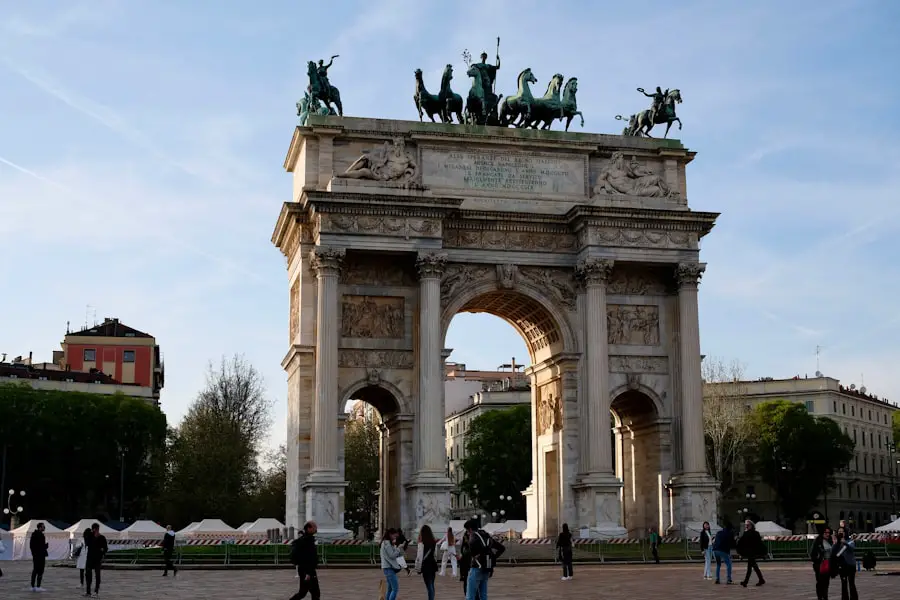
The Rise of Neoclassicism
The neoclassical style became synonymous with his regime, characterized by its emphasis on grandeur, heroism, and moral virtue. This style was reflected in the iconic works of artists such as Jacques-Louis David, who played a pivotal role in this cultural movement.
Patronage and Propaganda
Napoleon’s patronage extended to literature and architecture as well. He supported writers who aligned with his vision while suppressing those who opposed him. His commissioning of grand works was not only a means of self-aggrandizement but also a way to promote his ideals and shape public opinion.
Lasting Legacy
The construction of monumental structures like the Arc de Triomphe served not only as commemorative landmarks but also as symbols of national pride and unity. This cultural flourishing during Napoleon’s rule laid the groundwork for future artistic movements in France and influenced European art for years to come.
The Enduring Controversy Surrounding Napoleon’s Legacy
Despite his many accomplishments, Napoleon’s legacy remains contentious among historians and scholars.
The imposition of French rule often stifled local cultures and traditions, leading to resentment among conquered peoples.
Additionally, while he championed certain revolutionary ideals such as equality before the law, he simultaneously curtailed civil liberties by establishing an authoritarian regime that suppressed dissent. Supporters of Napoleon contend that he was a visionary leader who modernized France and laid the foundations for contemporary governance. They argue that his reforms brought about significant social progress, including advancements in education and legal rights for citizens.
Furthermore, they assert that his military campaigns were driven by a desire to spread revolutionary ideals rather than mere conquest for its own sake. This dichotomy between admiration for his achievements and criticism for his methods continues to fuel debates about his place in history.
Napoleon’s Legacy in the Modern World
In contemporary society, Napoleon’s legacy can be seen in various aspects of governance, law, military strategy, and cultural identity. The principles enshrined in the Napoleonic Code continue to influence legal systems around the world, particularly in countries with civil law traditions. His emphasis on meritocracy has inspired modern bureaucratic practices that prioritize competence over aristocratic privilege.
Moreover, military academies worldwide study Napoleon’s tactics as part of their curriculum on strategy and leadership. His ability to adapt to changing circumstances on the battlefield remains relevant for military leaders today who face complex geopolitical challenges. In popular culture, Napoleon is often depicted as both a hero and a tyrant—an embodiment of ambition and hubris—reflecting society’s ongoing fascination with his life story.
Ultimately, Napoleon Bonaparte’s legacy is one that encapsulates both triumphs and tragedies—a testament to the complexities of leadership during tumultuous times. His influence continues to resonate across various domains, ensuring that discussions about his life will persist well into the future.
Napoleon Bonaparte, a military leader who rose to prominence during the French Revolution, is often remembered for his strategic prowess and the Napoleonic Wars. While his influence on European history is undeniable, his legacy extends beyond the battlefield, impacting various aspects of culture and lifestyle. Interestingly, culinary arts during his era also saw significant evolution, with an emphasis on refined tastes and presentation. This influence can be seen in modern culinary creations that focus on intricate flavors and techniques. For instance, the article on Cutler & Co’s Wood-Grilled Prawns with Fried Garlic and Chilli Oil showcases a dish that embodies the sophisticated and bold flavors that might have been appreciated in Napoleon’s time, reflecting the ongoing legacy of culinary excellence.
FAQs
Who was Napoleon?
Napoleon Bonaparte was a French military and political leader who rose to prominence during the French Revolution and its associated wars. He became Emperor of the French from 1804 to 1814 and again in 1815.
What were Napoleon’s major accomplishments?
Napoleon is known for his military conquests and the extensive reforms he implemented in France. He expanded the French Empire, reformed the legal and educational systems, and introduced the Napoleonic Code, which had a lasting impact on legal systems around the world.
What were some of Napoleon’s major military campaigns?
Napoleon’s military campaigns included the Italian campaign, the Egyptian campaign, the War of the Third Coalition, the Peninsular War, and the invasion of Russia. He also fought numerous battles against various European powers.
What led to Napoleon’s downfall?
Napoleon’s downfall can be attributed to a combination of factors, including the failure of his military campaigns, the emergence of coalitions against him, and his own strategic mistakes. The invasion of Russia and the Battle of Waterloo were significant events that contributed to his downfall.
What was Napoleon’s legacy?
Napoleon’s legacy is complex and controversial. While he is remembered for his military prowess and the reforms he implemented, he is also criticized for his authoritarian rule and the widespread conflicts that occurred during his reign. His impact on European and world history is undeniable, and his legacy continues to be debated by historians.