

Fondant is a versatile sugar-based icing that has become a staple in the world of cake decorating. Its smooth, pliable texture allows bakers to create stunning, professional-looking cakes that are not only visually appealing but also delicious. Fondant can be rolled out and draped over cakes, molded into intricate shapes, or used to create detailed decorations.
The origins of fondant can be traced back to the 16th century, where it was initially used in French confectionery. Over the years, it has evolved into a popular medium for cake decorators, particularly for wedding cakes and special occasion desserts. There are two primary types of fondant: rolled fondant and poured fondant.
Rolled fondant is the most commonly used type for covering cakes and creating decorations. It is made from sugar, water, gelatin, and glycerin, which gives it its characteristic elasticity and smooth finish. Poured fondant, on the other hand, is a thicker syrup that is typically used as a glaze for pastries and candies.
While both types have their unique applications, rolled fondant is favored for its ability to be shaped and molded into various forms, making it an essential tool for cake artists.
Key Takeaways
- Fondant is a versatile sugar paste that can be used to cover and decorate cakes, creating a smooth and professional finish.
- Essential tools for working with fondant include a rolling pin, fondant smoother, sharp knife, and cornstarch or powdered sugar for dusting.
- Preparing your cake for fondant application involves leveling and crumb-coating the cake with buttercream or ganache to create a smooth surface.
- Kneading fondant until it is pliable and rolling it out evenly are key steps for successful fondant application.
- Techniques for covering a cake with fondant include draping the fondant over the cake, smoothing it with a fondant smoother, and trimming the excess fondant.
Essential Tools and Materials for Working with Fondant
To work effectively with fondant, having the right tools and materials is crucial. A clean, flat surface is essential for rolling out fondant; a silicone mat or a clean countertop works well. A rolling pin is another indispensable tool, preferably one that is non-stick or coated to prevent the fondant from adhering to it.
Additionally, a bench scraper can be useful for lifting and moving rolled fondant without damaging its shape. Other essential tools include fondant smoothers, which help achieve a flawless finish on the cake surface, and various cutters and molds for creating decorative elements. A set of food-safe brushes is also important for applying edible glue or water to adhere pieces of fondant together.
For those looking to add intricate details, modeling tools such as ball tools and veining tools can help create lifelike textures and designs. Lastly, food coloring gels or powders are necessary for tinting fondant to achieve the desired colors for your cake design.
Preparing Your Cake for Fondant Application

Before applying fondant to a cake, proper preparation is key to ensuring a smooth and professional finish. The first step is to ensure that the cake itself is completely cooled. A warm cake can cause the fondant to melt or become sticky, leading to an uneven application.
Once cooled, it’s advisable to level the cake layers using a serrated knife or a cake leveler to create a flat surface. This step is crucial as it prevents any bulging or unevenness once the fondant is applied. After leveling, the next step involves applying a crumb coat—a thin layer of buttercream or ganache that seals in crumbs and provides a smooth base for the fondant.
The crumb coat should be spread evenly over the entire surface of the cake and then chilled in the refrigerator for about 30 minutes. This chilling process helps firm up the buttercream, making it easier to apply the fondant without disturbing the underlying layers. Once chilled, the cake should be inspected for any imperfections; any bumps or uneven areas should be smoothed out before proceeding with the fondant application.
Tips for Kneading and Rolling Out Fondant
| Tips for Kneading and Rolling Out Fondant |
|---|
| 1. Use a small amount of shortening on your hands and work surface to prevent sticking. |
| 2. Knead fondant until it is smooth and pliable, but be careful not to over-knead. |
| 3. Roll out fondant on a clean, smooth surface dusted with powdered sugar or cornstarch to prevent sticking. |
| 4. Use a rolling pin to evenly roll out the fondant to the desired thickness. |
| 5. Lift and rotate the fondant as you roll to ensure it doesn’t stick to the surface. |
| 6. Use a fondant smoother to gently smooth out any wrinkles or air bubbles. |
Kneading fondant is an essential step that ensures it reaches the right consistency for rolling out. When you first open a package of fondant, it may feel stiff or hard; kneading helps soften it and makes it more pliable. Start by breaking off a piece of fondant and warming it in your hands through gentle kneading.
If the fondant feels too sticky during this process, dust your hands and work surface with cornstarch or powdered sugar to prevent it from adhering. Once the fondant has reached a soft and pliable state, it’s time to roll it out. Begin by dusting your work surface with cornstarch or powdered sugar to prevent sticking.
Using a rolling pin, roll out the fondant evenly to about 1/8 inch thick. It’s important to rotate the fondant as you roll to maintain an even thickness throughout. If you notice any cracks forming at the edges while rolling, simply knead the fondant again until smooth before continuing.
For larger cakes, consider rolling out the fondant in sections and joining them together on the cake.
Techniques for Covering a Cake with Fondant
Covering a cake with fondant requires precision and practice but can yield stunning results when done correctly. After rolling out your fondant to the desired thickness, carefully lift it using your rolling pin or by folding it over your arm. Position the rolled fondant over the center of your cake, allowing it to drape down the sides.
It’s crucial to work quickly at this stage to prevent the fondant from drying out. Once positioned, gently press the fondant against the sides of the cake using your hands or a fondant smoother to eliminate air bubbles and creases. Start from the top and work your way downwards, smoothing out any wrinkles as you go.
If you encounter stubborn air bubbles, use a pin to puncture them gently and smooth over the area again. After achieving a smooth finish on all sides, trim any excess fondant at the base of the cake using a sharp knife or pizza cutter. This technique ensures that your cake has clean edges and a polished appearance.
Creating Decorative Elements with Fondant
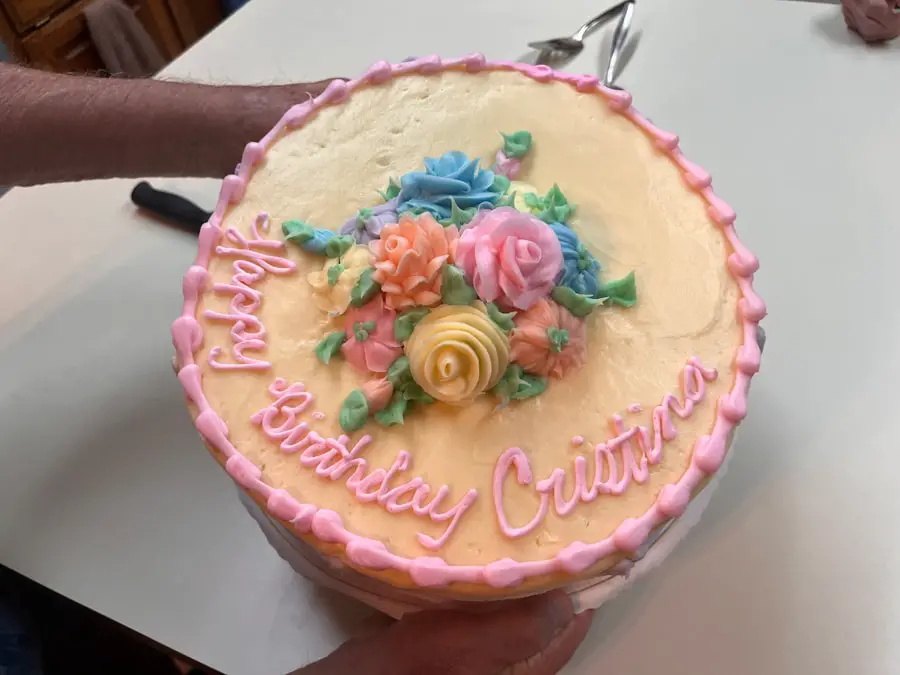
Fondant is not just for covering cakes; it also serves as an excellent medium for creating decorative elements that can enhance your cake design significantly. One popular technique is making flowers from fondant, which can range from simple blossoms to intricate roses. To create flowers, start by rolling out small pieces of colored fondant into thin petals using flower cutters or by hand shaping them.
These petals can then be layered and shaped using floral wires for added support. In addition to flowers, you can create various other decorative elements such as bows, ribbons, and figurines. For bows, roll out strips of fondant and shape them into loops before attaching them together with edible glue or water.
For figurines, use modeling tools to add details like facial features or clothing textures. The versatility of fondant allows bakers to express their creativity fully; whether you’re crafting whimsical characters for a child’s birthday cake or elegant decorations for a wedding cake, the possibilities are endless.
Troubleshooting Common Fondant Issues
Even experienced bakers encounter challenges when working with fondant. One common issue is cracking, which can occur if the fondant is rolled too thin or if it dries out too quickly during application. To prevent cracking, ensure that your workspace is not too dry and consider covering unused fondant with plastic wrap while you work.
If cracks do appear after application, they can often be smoothed over with a small amount of vegetable shortening or by gently kneading additional fondant into the affected area. Another frequent problem is stickiness during rolling or application. If your fondant becomes too sticky while working with it, dusting your surface with cornstarch or powdered sugar can help alleviate this issue.
If you find that your fondant is too soft after kneading, adding a small amount of tylose powder can help firm it up without compromising its pliability.
Storing and Transporting Fondant-Decorated Cakes
Proper storage and transportation of fondant-decorated cakes are critical to maintaining their appearance and integrity until they reach their destination. If you need to store a decorated cake before serving, keep it in a cool environment away from direct sunlight or heat sources that could cause melting or fading of colors. Ideally, cakes should be stored in an airtight container or covered loosely with plastic wrap to prevent them from drying out.
When it comes to transporting cakes adorned with fondant decorations, stability is key. Use a sturdy cake box that fits snugly around your cake without excessive movement during transit. If possible, transport the cake in an upright position; laying it flat can lead to damage from shifting decorations or collapsing layers.
For added security during transport, consider using dowels or straws inserted into the cake layers for support—this technique helps prevent tiered cakes from sliding apart while on the move. By understanding these fundamental aspects of working with fondant—from preparation through decoration and transport—you can elevate your cake decorating skills significantly. With practice and creativity, you’ll be able to create stunning cakes that not only look beautiful but also taste delicious.
If you’re a fan of baking with fondant, you may also enjoy trying out a recipe for Peanut-Studded Milk Chocolate Brownies. These decadent brownies combine the rich flavors of milk chocolate and peanuts for a delicious treat. Check out the recipe here to satisfy your sweet tooth.
FAQs
What is fondant?
Fondant is a type of icing used to decorate and cover cakes and pastries. It is made from sugar, water, and sometimes glucose or corn syrup, and can be flavored and colored as desired.
How is fondant used in cake decorating?
Fondant is rolled out into a thin sheet and then draped over a cake to create a smooth, polished finish. It can also be shaped and molded into various decorative elements such as flowers, ribbons, and figurines.
Is fondant edible?
Yes, fondant is edible and is often enjoyed as part of the cake or pastry it decorates. However, some people may choose to remove it before eating the dessert.
Can fondant be made at home?
Yes, fondant can be made at home using a simple recipe that typically involves heating sugar and water to a specific temperature, then kneading it into a smooth, pliable consistency.
What are the different types of fondant?
There are two main types of fondant: rolled fondant, which is used for covering cakes, and poured fondant, which is used for filling pastries and making candies. There are also variations such as marshmallow fondant, which uses marshmallows as a base ingredient.