

Truffles, the highly sought-after fungi that grow underground in symbiosis with tree roots, have a rich and storied history that dates back to ancient civilizations. The earliest recorded mention of truffles can be traced to the ancient Sumerians, who lived in Mesopotamia around 4000 BThey revered these fungi, associating them with divine qualities and considering them a gift from the gods. The Greeks and Romans also held truffles in high esteem, with the Roman philosopher Pliny the Elder documenting their culinary and medicinal uses in his writings.
He believed that truffles were formed from the earth’s moisture and lightning strikes, showcasing the mystique that surrounded these delicacies.
In medieval Europe, they were often associated with nobility and were used in extravagant feasts.
The French, in particular, developed a deep appreciation for truffles, leading to the establishment of truffle hunting traditions that continue to this day. By the 18th century, truffles had become a symbol of luxury and sophistication, often featured in the kitchens of renowned chefs. The cultivation of truffles began to gain traction in the 19th century, particularly in France, where specific tree species were identified as ideal hosts for truffle growth.
This marked a significant turning point in the history of truffles, as they transitioned from wild foraged delicacies to cultivated commodities.
Key Takeaways
- Truffles have a long history dating back to ancient times, with evidence of their consumption found in various cultures around the world.
- There are several types of truffles, including black truffles, white truffles, and summer truffles, each with their own unique flavor and aroma profiles.
- Truffle hunting is a traditional practice that involves using trained dogs or pigs to sniff out these elusive fungi in their natural habitat.
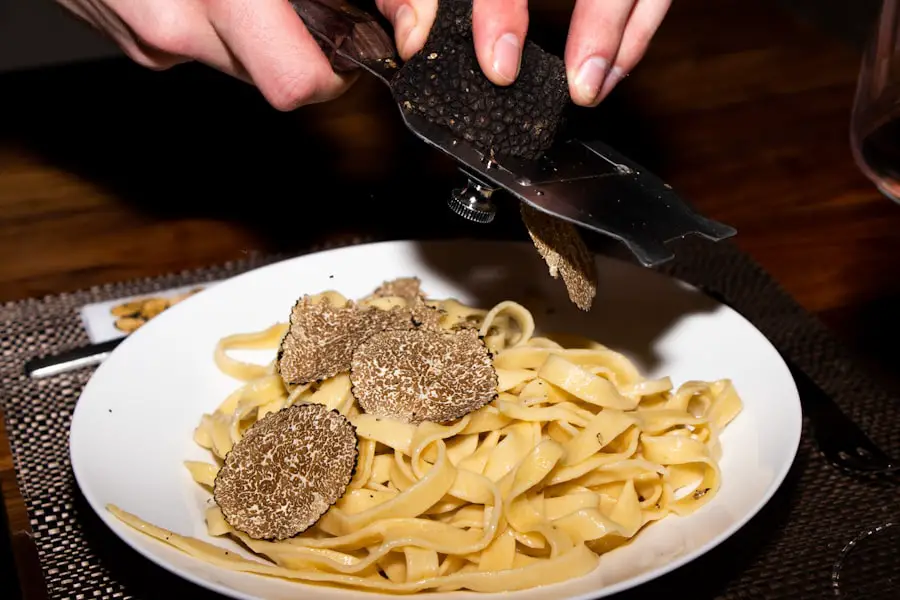
- Chefs use truffles to enhance the flavor of dishes, often shaving them over pasta, risotto, or scrambled eggs for a luxurious touch.
- Truffle festivals are held in regions known for truffle production, offering visitors the opportunity to sample truffle-infused dishes and learn about truffle cultivation.
Types of Truffles: A Guide to the Different Varieties
The Black Truffle: A French Delicacy
The black truffle (Tuber melanosporum), also known as the “Perigord truffle,” is one of the most famous varieties. Native to the Perigord region of France, it is prized for its robust flavor and earthy aroma. Typically harvested during the winter months, the black truffle is a favorite among chefs for its versatility in both savory and sweet dishes.
The White Truffle: A Rare Italian Treasure
The white truffle (Tuber magnatum) is primarily found in the Piedmont region of Italy. Renowned for its intense aroma and delicate flavor, white truffles are often served raw, shaved over dishes like pasta or risotto to enhance their natural flavors. The rarity of white truffles contributes to their high market value, making them one of the most expensive food items in the world.
Other Varieties: Summer, Burgundy, and Chinese Truffles
Other notable varieties include the summer truffle (Tuber aestivum), which is milder in flavor and more widely available than its winter counterparts. Summer truffles are often used in dishes where a subtler truffle flavor is desired. Additionally, there are lesser-known varieties such as the Burgundy truffle (Tuber uncinatum) and the Chinese truffle (Tuber indicum), each offering unique characteristics that can enhance various culinary creations.
Truffle Hunting: Uncovering the Secrets of Finding These Delicacies
Truffle hunting is an age-old practice that combines skill, knowledge, and a bit of luck. Traditionally, hunters relied on trained dogs to sniff out these subterranean treasures, as their keen sense of smell is far superior to that of humans. Breeds such as Lagotto Romagnolo, a dog native to Italy, are particularly prized for their ability to locate truffles buried deep beneath the soil.
The bond between hunter and dog is crucial; successful hunts depend on mutual trust and understanding. The process begins with identifying suitable habitats for truffles, which typically grow in calcareous soils rich in organic matter. Oak, hazelnut, and beech trees are common hosts for various truffle species.
Once a promising area is located, the hunter allows their dog to lead the way. When a dog indicates a potential find by digging or sniffing intently at a spot, the hunter carefully excavates the area to reveal the hidden treasure. This delicate process requires patience and respect for nature; overharvesting can lead to diminished truffle populations.
In recent years, some regions have embraced technology to aid in truffle hunting. Drones equipped with thermal imaging cameras can help identify areas where soil temperatures indicate potential truffle growth. However, traditional methods remain popular among purists who value the age-old connection between hunter and dog.
Culinary Uses of Truffles: How Chefs Incorporate Them into Dishes
| Truffle Type | Culinary Use |
|---|---|
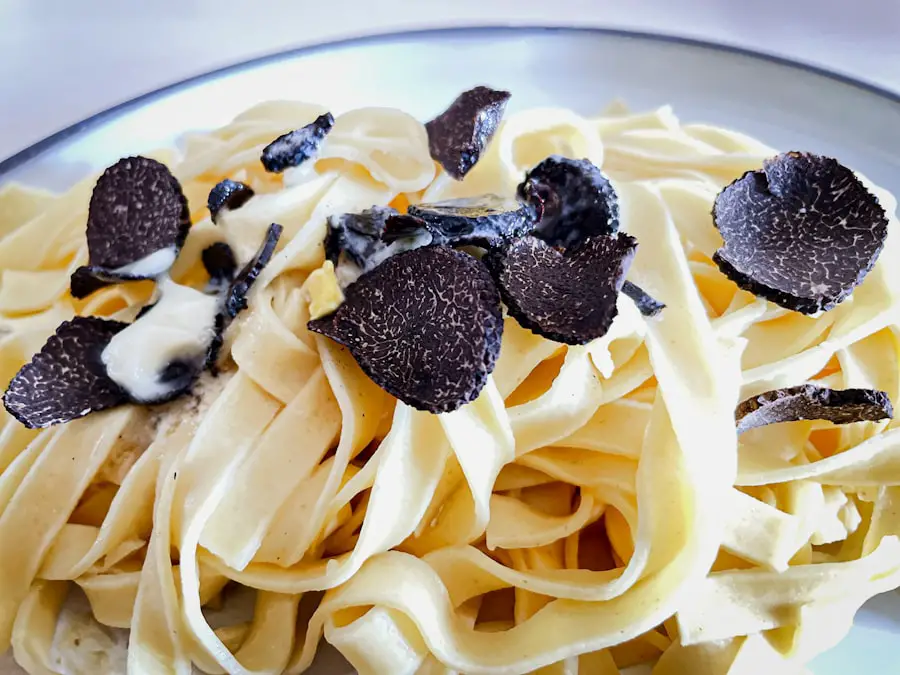
| Black Truffle | Sliced or shaved over pasta, risotto, or scrambled eggs |
| White Truffle | Used to flavor butter, oils, or sauces for drizzling over dishes |
| Truffle Oil | Added to dressings, marinades, or drizzled over finished dishes |
| Truffle Salt | Sprinkled over popcorn, fries, or roasted vegetables |
The culinary applications of truffles are as diverse as their varieties. Chefs around the world have developed innovative ways to incorporate these luxurious fungi into their dishes, elevating flavors and creating unforgettable dining experiences. One classic method is to shave fresh truffles over pasta or risotto just before serving.
The heat from the dish releases the truffle’s aromatic compounds, infusing the meal with an earthy richness that is hard to replicate. Truffles also find their way into sauces, oils, and butters. Truffle oil, made by infusing olive oil with truffle essence or actual truffles, has become a popular ingredient in modern cuisine.
While some purists argue that synthetic truffle oil lacks authenticity, it remains a staple in many kitchens for its ability to impart a truffle-like flavor without the hefty price tag associated with fresh truffles. In fine dining establishments, chefs often use truffles as a finishing touch on dishes such as foie gras or scallops. The delicate balance of flavors created by pairing truffles with rich ingredients enhances both components, resulting in a harmonious culinary experience.
Desserts have also begun to embrace truffles; chocolate truffles infused with hints of black or white truffle oil offer an unexpected yet delightful twist on traditional sweets.
Truffle Festivals: Where to Experience the Best Truffle Celebrations
Truffle festivals are vibrant celebrations that honor these exquisite fungi while bringing together communities and food enthusiasts alike. One of the most famous events is the Alba White Truffle Festival held annually in Piedmont, Italy. This month-long festival attracts visitors from around the globe who come to indulge in culinary delights featuring white truffles.
The event includes tastings, cooking demonstrations by renowned chefs, and even auctions where rare white truffles fetch astronomical prices. In France, the Truffle Market in Sorgue showcases black truffles from the region of Provence. This lively market features local producers offering their freshly harvested truffles alongside artisanal products like cheeses and wines that pair beautifully with them.
Visitors can participate in guided tours that delve into the history of truffle hunting while enjoying tastings that highlight the unique flavors of this prized fungus. Other notable festivals include the Truffle Festival in Tasmania, Australia, which celebrates both black and white truffles produced in this unique climate. The festival features farm tours where attendees can learn about cultivation techniques and participate in guided hunts alongside experienced foragers.
These events not only promote local economies but also foster a deeper appreciation for the culinary arts surrounding truffles.
The Truffle Market: Understanding the Economics of Truffle Trade
The economics of the truffle market are complex and influenced by various factors including supply and demand dynamics, seasonal variations, and geographical considerations. Truffles are among the most expensive food items globally; prices can range from hundreds to thousands of dollars per kilogram depending on variety and quality.
The market is also affected by environmental factors such as climate change and soil conditions that impact truffle growth. As certain regions experience shifts in weather patterns or soil degradation, traditional harvesting areas may see declines in production. This has led some producers to explore sustainable farming practices aimed at preserving both soil health and truffle populations.
Additionally, there is an increasing trend toward cultivating truffles rather than relying solely on wild harvesting. This shift has opened up new opportunities for farmers looking to diversify their crops while tapping into the lucrative market for gourmet ingredients. However, cultivating truffles requires patience; it can take several years before trees begin producing viable fungi.
As more growers enter this market, competition may influence pricing structures and availability.
Truffle Tourism: Exploring Regions Known for Truffle Production
Truffle tourism has emerged as a niche travel sector that allows enthusiasts to immerse themselves in regions renowned for their truffle production. Destinations such as Piedmont in Italy and Provence in France offer unique experiences that combine culinary exploration with cultural immersion. Visitors can participate in guided hunts led by experienced foragers who share insights into traditional harvesting methods while enjoying scenic landscapes dotted with oak trees.
In addition to hands-on hunting experiences, many regions host cooking classes where participants learn how to prepare dishes featuring freshly harvested truffles. These classes often emphasize local ingredients and traditional recipes passed down through generations. Travelers can also indulge in gourmet dining experiences at restaurants known for their innovative use of truffles on menus crafted by acclaimed chefs.
Australia has also begun to carve out its niche within this tourism sector with regions like Tasmania gaining recognition for their high-quality black and white truffles. Tours often include visits to local farms where guests can witness cultivation practices firsthand while sampling products made from freshly harvested fungi.
Truffle Conservation: Efforts to Protect and Sustain Truffle Populations
As demand for truffles continues to rise globally, conservation efforts have become increasingly important to ensure sustainable harvesting practices and protect natural habitats where these fungi thrive. Organizations dedicated to preserving biodiversity are working alongside farmers and foragers to promote responsible harvesting techniques that minimize environmental impact. One approach involves educating hunters about sustainable practices such as avoiding overharvesting specific areas or using tools that do not disturb surrounding ecosystems during excavation processes.
Additionally, initiatives aimed at reforestation efforts help restore habitats conducive to healthy truffle growth while promoting biodiversity within local ecosystems. Research institutions are also exploring ways to cultivate new strains of truffles that may be more resilient to climate change or disease pressures affecting existing populations. By investing in scientific research focused on understanding fungal biology and ecology, stakeholders hope to develop strategies that ensure long-term viability for both wild and cultivated varieties.
Through collaborative efforts between farmers, researchers, conservationists, and culinary professionals alike, there is hope for a future where both consumers can enjoy these exquisite delicacies while ensuring their preservation for generations to come.
If you’re a fan of indulgent flavors like truffles, you may also enjoy reading about Vietnamese-inspired Sweet and Spicy Catfish. This dish combines bold and unique flavors to create a delicious and satisfying meal. Check out the recipe here for a culinary adventure that will tantalize your taste buds.
FAQs
What are truffles?
Truffles are a type of fungi that grow underground, typically near the roots of certain trees such as oak, hazel, and beech. They are highly prized for their strong, earthy flavor and are considered a delicacy in many cuisines.
What do truffles look like?
Truffles have a rough, irregular shape and a dark brown or black exterior. They vary in size, with some being as small as a pea and others as large as a potato. The interior of a truffle is marbled with white veins.
Where are truffles found?
Truffles are found in various regions around the world, including Italy, France, Spain, Croatia, and the United States. They are typically found in forests with specific soil and climate conditions that are conducive to their growth.
How are truffles harvested?
Truffles are typically harvested using specially trained dogs or pigs, as they have a keen sense of smell that allows them to locate the truffles underground. Once located, the truffles are carefully dug up by hand to avoid damaging them.
What are the different types of truffles?
There are several different species of truffles, each with its own unique flavor and aroma. Some of the most well-known types include black truffles (Tuber melanosporum), white truffles (Tuber magnatum), and summer truffles (Tuber aestivum).
How are truffles used in cooking?
Truffles are often used to flavor dishes such as pasta, risotto, and eggs. They can be shaved or grated over the dish to add a rich, earthy flavor. Truffle oil and truffle salt are also popular ways to incorporate truffle flavor into dishes.