

The croissant, a pastry synonymous with French culture, has a history that traces back to Vienna, Austria. The origins of this flaky delight can be linked to the 17th century when the city was under siege by the Ottoman Empire. According to popular legend, bakers working in the early hours of the morning heard the sounds of tunneling beneath the city and alerted the authorities, leading to a successful defense against the invaders.
To commemorate this victory, they created a crescent-shaped pastry, known as the “kipferl,” which mirrored the crescent moon on the Ottoman flag. This pastry was not only a symbol of triumph but also a culinary innovation that would eventually make its way to France. In the 19th century, the kipferl crossed borders into France, where it underwent a transformation into what we now recognize as the croissant.
The introduction of laminated dough techniques, which involve folding butter into dough multiple times to create layers, was pivotal in this evolution. This method was popularized by French pastry chefs who sought to elevate the texture and flavor of baked goods. By the time of the 1900s, the croissant had firmly established itself in French patisseries, becoming a staple of breakfast and a symbol of French culinary artistry.
The croissant’s journey from Vienna to France is not just a tale of migration; it reflects the cultural exchanges that shape culinary traditions across Europe.
Key Takeaways
- The croissant originated in Vienna, Austria, and was brought to France in the 19th century, where it became an iconic pastry.
- Making the perfect croissant requires techniques such as lamination and the use of high-quality ingredients like butter and flour.
- Croissants can be elevated with decadent variations such as chocolate, almond, and savory fillings like ham and cheese.
- The best beverages to enjoy with a croissant include coffee, tea, and hot chocolate, which complement the buttery and flaky pastry.
- A guide to bakeries and cafes where you can find the best croissants, including renowned establishments in France and around the world.
The Art of Making the Perfect Croissant: Techniques and Ingredients
Creating the perfect croissant is an art form that requires precision, patience, and an understanding of ingredients. The foundation of a croissant lies in its dough, which is made from flour, water, yeast, salt, and butter. The choice of flour is crucial; high-protein bread flour is often preferred for its ability to develop gluten, which provides structure and chewiness.
The quality of butter is equally important; European-style butter with a higher fat content yields a richer flavor and contributes to the flakiness of the pastry. The process begins with making a dough known as détrempe, which is allowed to rest before incorporating the butter block through a technique called lamination. This involves rolling out the dough into a rectangle, placing a cold slab of butter in the center, and folding it over like an envelope.
The dough is then rolled out and folded multiple times—typically three or four—to create layers. Each fold traps air and creates pockets that expand during baking, resulting in the signature flaky texture. Temperature control is vital throughout this process; keeping the dough and butter cold ensures that they remain distinct layers rather than merging into a single mass.
Decadent Variations: Flavors and Fillings to Elevate Your Croissant Experience
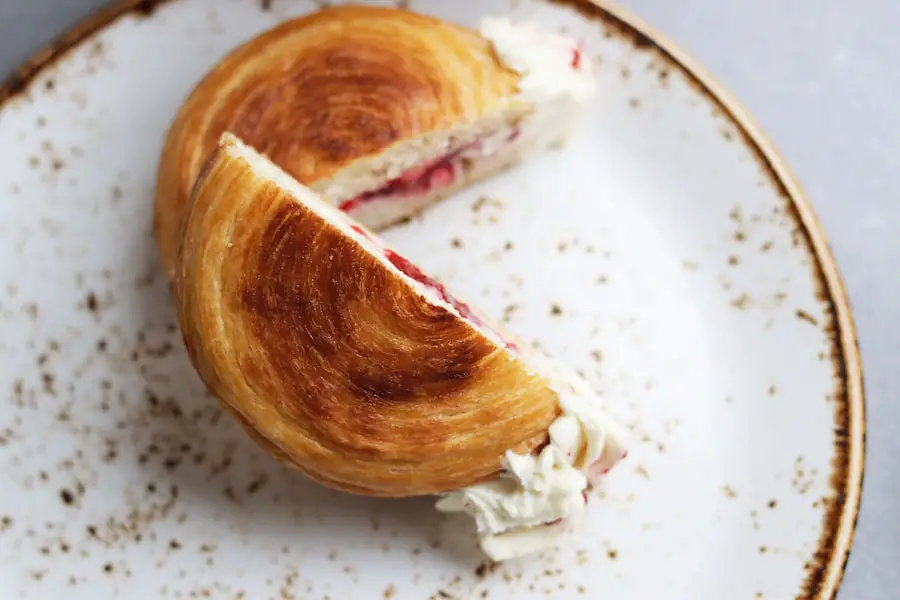
While the classic butter croissant is a beloved favorite, bakers have embraced creativity by introducing an array of flavors and fillings that elevate this pastry to new heights. One popular variation is the almond croissant, which features a filling made from almond paste or frangipane, often topped with sliced almonds and powdered sugar.
Another decadent option is the chocolate croissant, or pain au chocolat, which incorporates rich dark chocolate within its layers. The contrast between the flaky pastry and melting chocolate creates an indulgent experience that has become a staple in many bakeries.
For those seeking a savory twist, ham and cheese croissants offer a satisfying combination of flavors; typically filled with Gruyère cheese and thinly sliced ham, these pastries are perfect for brunch or as a hearty snack. Seasonal variations also abound; for instance, pumpkin spice croissants may appear in autumn, while fruit-filled versions featuring berries or custard can be found in summer.
Pairing Perfection: The Best Beverages to Enjoy with Your Croissant
| Beverage | Recommended Pairing |
|---|---|
| Coffee | Espresso or Cappuccino |
| Tea | Earl Grey or English Breakfast |
| Hot Chocolate | Classic Hot Chocolate or Dark Chocolate |
| Orange Juice | Freshly Squeezed Orange Juice |
The experience of enjoying a croissant can be significantly enhanced by selecting the right beverage to accompany it. Coffee is perhaps the most traditional pairing; a rich espresso or a creamy cappuccino complements the buttery notes of the pastry beautifully. The bitterness of coffee balances the sweetness of flavored croissants, creating a harmonious taste experience.
In France, it is common to enjoy a café au lait—coffee mixed with steamed milk—which adds a velvety texture that pairs well with both sweet and savory varieties. For those who prefer tea, options such as Earl Grey or green tea can provide a refreshing contrast to the richness of a croissant. The floral notes of Earl Grey can enhance almond or fruit-filled pastries, while green tea’s subtle earthiness works well with plain or savory options.
Additionally, for a more indulgent experience, pairing croissants with hot chocolate can create a luxurious treat; the creamy sweetness of hot chocolate complements the flaky texture and buttery flavor of the pastry.
Where to Find the Best Croissants: A Guide to Bakeries and Cafes
Finding exceptional croissants requires exploring local bakeries and cafes that prioritize quality ingredients and traditional techniques. In Paris, renowned establishments such as Du Pain et des Idées are celebrated for their artisanal approach to baking. Their croissants are crafted using organic flour and high-quality butter, resulting in pastries that are both flaky and flavorful.
Another must-visit is La Maison Pichard, where you can find award-winning croissants that have garnered acclaim for their perfect balance of texture and taste. Beyond Paris, cities around the world boast bakeries that have mastered the art of croissant-making. In New York City, for instance, Dominique Ansel Bakery has gained fame for its inventive takes on classic pastries, including their signature Cronut—a hybrid between a croissant and donut.
Meanwhile, in Melbourne, Baker D. Chirico offers an array of beautifully crafted croissants that reflect both traditional French techniques and local flavors. Exploring these bakeries not only satisfies cravings but also provides insight into regional interpretations of this beloved pastry.
The Croissant’s Place in French Culture: Symbolism and Tradition

The Croissant as a Social Ritual
Traditionally, croissants are enjoyed during breakfast or as an afternoon snack, often paired with café au lait in bustling Parisian cafés where locals gather to socialize and unwind. This ritual reflects a broader cultural appreciation for food as an experience rather than merely sustenance; sharing a croissant over coffee fosters connections among friends and family.
A Symbol of French Identity
The croissant has become an emblem of French identity itself, featuring prominently in literature, art, and film. Its presence underscores its status as more than just food; it represents an idealized lifestyle characterized by elegance and indulgence.
Embodying the French Philosophy of “Joie de Vivre”
In many ways, enjoying a croissant encapsulates the French philosophy of “joie de vivre,” or joy of living—a celebration of life’s simple pleasures through exquisite flavors and shared moments.
The Health Benefits of Indulging in a Decadent Croissant
While often viewed as an indulgence due to its buttery richness and calorie content, there are health benefits associated with enjoying croissants in moderation. One notable aspect is their source of energy; carbohydrates from flour provide fuel for daily activities while fats from butter contribute to satiety. Additionally, high-quality butter contains fat-soluble vitamins such as A, D, E, and K—nutrients essential for various bodily functions including immune support and skin health.
Furthermore, indulging in a croissant can have psychological benefits as well. Treating oneself to a delicious pastry can enhance mood and promote feelings of happiness due to the pleasure derived from eating something enjoyable. This aligns with research suggesting that savoring food mindfully can lead to greater satisfaction and overall well-being.
When enjoyed as part of a balanced diet alongside nutritious foods, croissants can be part of a healthy lifestyle that embraces both indulgence and nourishment.
Tips for Making the Perfect Croissant at Home: Recipes and Tricks from the Experts
For those inspired to create their own perfect croissants at home, several tips can help ensure success in this rewarding endeavor. First and foremost is mastering the lamination process; keeping both dough and butter at optimal temperatures is crucial for achieving distinct layers. Using chilled ingredients helps maintain structure during rolling and folding—if either becomes too warm or soft, it can lead to undesirable results.
Another key tip is allowing ample resting time between folds; this relaxation period enables gluten to relax while also allowing flavors to develop fully. Many experts recommend refrigerating dough overnight after completing lamination for enhanced flavor complexity. Additionally, using a digital kitchen scale for precise measurements can significantly improve consistency in results.
For those seeking recipes, numerous resources are available online from renowned chefs and bakers who share their techniques for crafting perfect croissants at home. Experimenting with different fillings or flavorings can also add personal flair to your creations—whether it’s incorporating herbs into savory versions or adding spices like cinnamon for sweet variations. With practice and patience, anyone can master this iconic pastry and enjoy the fruits of their labor fresh from their own oven.
If you’re a fan of delicious pastries like croissants, you may also enjoy trying out this chocolate strawberry layer cake recipe from Flavorful Sips. Indulge in the rich flavors of chocolate and sweet strawberries layered together in a decadent dessert that is sure to satisfy your sweet tooth.
FAQs
What is a croissant?
A croissant is a buttery, flaky, and crescent-shaped pastry that originated in France. It is made of layered yeast-leavened dough that is folded and rolled several times to create its characteristic texture.
What are the main ingredients in a croissant?
The main ingredients in a croissant include flour, water, yeast, butter, sugar, and salt. These ingredients are combined to create the dough, which is then folded and rolled to create the layers in the pastry.
How is a croissant made?
To make a croissant, the dough is prepared by mixing the ingredients together and then kneading the dough until it is smooth and elastic. The dough is then rolled out and folded multiple times to create the layers. It is then shaped into crescent shapes, proofed, and baked until golden brown.
What is the history of the croissant?
The croissant has its origins in Austria, where it was known as the kipferl. It was brought to France in the 19th century and became popularized as the croissant. Today, it is a staple of French pastry and is enjoyed worldwide.
How is a croissant typically served?
Croissants are often served as a breakfast pastry and can be enjoyed plain or filled with sweet or savory fillings. They are also commonly served with coffee or tea. In France, it is traditional to enjoy a croissant with a cup of coffee for breakfast.